

Pastel de nata, Lisbon custard tart
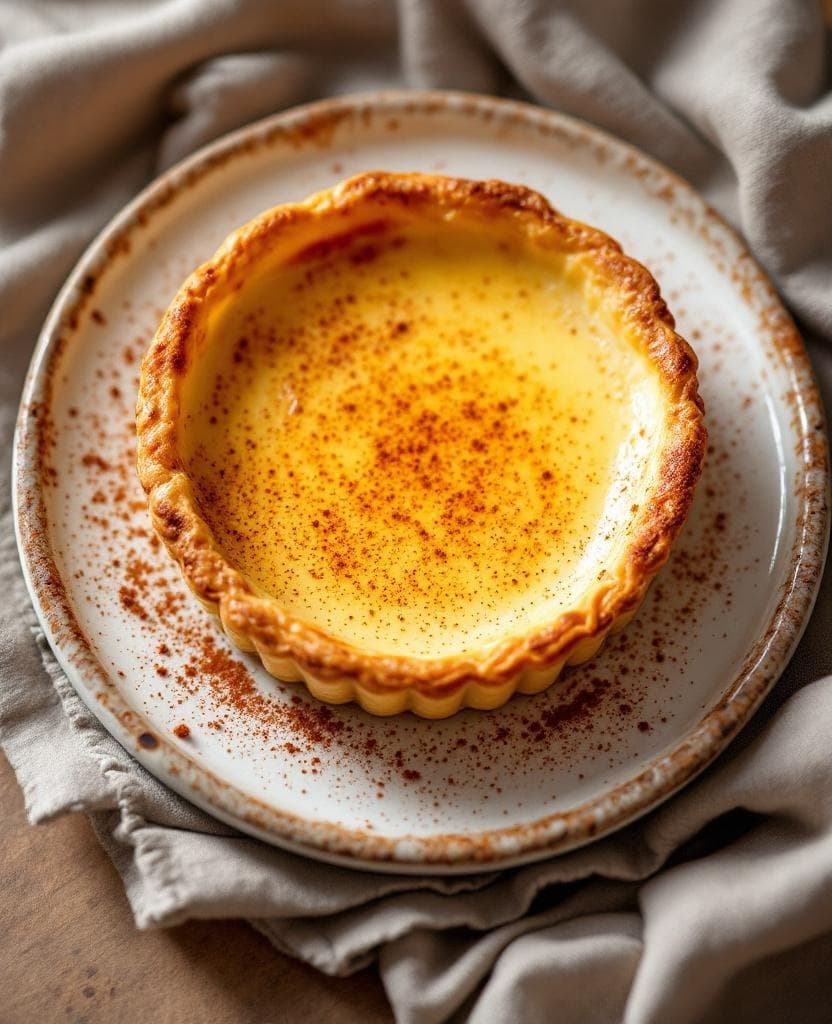
Portugal's most beloved pastry — a crisp pastry shell filled with a rich egg custard, scorched under a hot grill. Eaten warm, dusted with cinnamon and powdered sugar.
Pastel de nata is the Portuguese pastry that conquered the world. A flaky shell of puff pastry, a custard interior, and the defining feature: black scorch marks on top where the custard caramelizes at extreme heat. The original recipe is from the Jerónimos monastery near Lisbon in the 19th century, and the bakery Pastéis de Belém still guards it as a secret. The home version cannot replicate it exactly, but it gets remarkably close. The two non-negotiables are puff pastry (laminated for hours, layers visible) and a screamingly hot oven (250°C / 480°F minimum). Eat warm, dusted with cinnamon and icing sugar, ideally with a galão coffee.
Method
Make a syrup.
Combine sugar, water, lemon peel, and cinnamon stick in a small saucepan. Simmer 3 minutes until slightly syrupy. Remove peel and stick. Set aside.
Make the cream.
Whisk flour with a little cold milk until smooth. Heat remaining milk until just simmering. Pour the hot milk slowly over the flour mixture, whisking constantly. Return to the pan and stir over low heat until thickened. Remove from heat. Beat in egg yolks, then stir in the warm sugar syrup. Cool 10 minutes.
Line the tins.
Preheat oven to its highest setting (250–260°C). Roll puff pastry tightly from the short end into a log. Slice into 12 rounds. Press each round into a greased muffin tin using your thumb, spreading it up the sides.
Fill and bake.
Fill each case three-quarters with custard. Bake 12–15 minutes at highest heat until the pastry is crisp and the custard has dark brown scorch marks.
Serve.
Cool on a rack. Serve warm, dusted with cinnamon and icing sugar. Eat standing up if possible.
Frequently asked questions
- Why does the custard need to burn?
- Those black spots are caramelisation of sugar in the custard at extreme heat. They give pastel de nata its signature flavour, slightly bitter, slightly toasty, balancing the sweet custard. A pale pastel de nata is an incomplete one.
- My oven only goes to 230°C, will this work?
- Yes, but bake longer (16–18 minutes) and place the tray on the highest shelf, closest to the broiler. Switch to broil for the final 2 minutes to scorch the top. Not ideal but acceptable.
- Can I use store-bought puff pastry?
- Yes. Look for "all-butter" puff pastry, the layers and flavour are vastly better than vegetable-fat versions. Roll tightly into a log before slicing for the spiral effect inside.
- How long do they keep?
- Same day, ideally. The pastry softens after 4–5 hours. Reheat for 5 minutes at 200°C (390°F) to restore crispness. Do not microwave, they go soggy.
- What is the difference between pastel de nata and pastel de Belém?
- Pastel de Belém is the trademarked original from the Belém bakery; pastel de nata is the generic term for the same pastry made elsewhere. The Belém recipe is secret; outside Belém, every bakery has its own version.
Rate this recipe
Join the Club to rate →