


Sweet crêpes, jam & butter
The French breakfast that takes 20 minutes but feels like a Sunday in Paris. Paper-thin, with lacy edges, served warm with good butter and a jar of whatever jam you have.
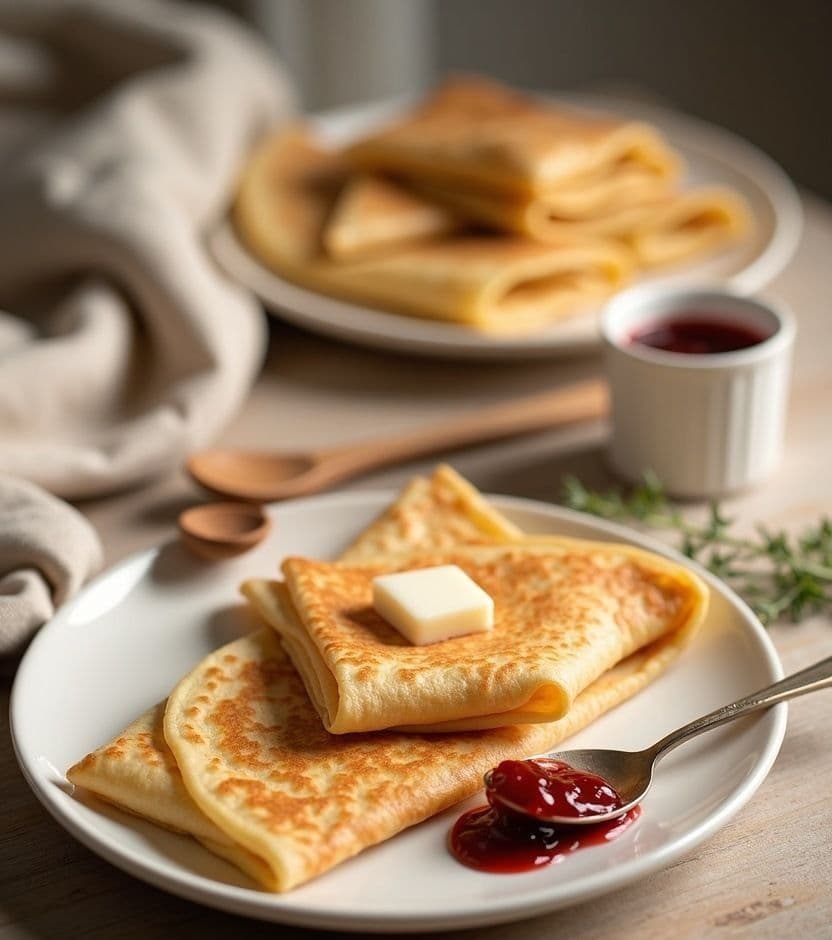
Crêpes are the French breakfast that takes twenty minutes but feels like a Sunday in Paris. Paper-thin, with lacy crisp edges and a tender middle, served warm with good butter and a spoonful of jam. The technique is genuinely simple, what matters is two things: a smooth batter (whisked or blended) and at least thirty minutes of rest before cooking. Resting the batter relaxes the gluten and lets bubbles settle; without the rest, you get tough, holey crêpes. With the rest, you get the silky pliable pancakes that fold into perfect triangles. Eat hot, with cold butter melting and good jam, strawberry, apricot, or fig.
Method
Make the batter.
Whisk flour and eggs together in a bowl until smooth. Gradually add milk and water, whisking constantly. Add the melted butter and salt. The batter should be thin — the consistency of heavy cream.
Rest it.
Cover and let the batter rest at room temperature for 30 minutes. This is not optional — the flour absorbs the liquid fully and the crêpes cook more evenly.
Cook the first crêpe (and discard it).
Heat an 8-inch non-stick pan over medium-high heat. Brush with a little butter. Pour about ¼ cup of batter into the centre, immediately swirling to coat the pan thinly. Cook 1–1.5 minutes until the edges lift and the surface looks dry. Flip and cook 30 seconds more.
Cook the rest.
Continue with the remaining batter, stacking the finished crêpes on a warm plate. Brush the pan lightly between each.
Serve warm.
Spread each crêpe with butter and a spoonful of jam. Fold into quarters or roll loosely. Serve immediately while still warm.
Frequently asked questions
- How are crêpes different from pancakes?
- Crêpes are thin, smooth, and flexible (closer to a wrap). Pancakes are thick, fluffy, and absorbent. The batter for crêpes has more liquid and less leavening, the texture is meant to be delicate, not airy.
- Why does the batter need to rest?
- Resting (30 min minimum, ideally 1 hour) relaxes the gluten and lets air bubbles release. The result is a smoother, more flexible crêpe. Skip the rest and the crêpes are tough and slightly bubbly.
- What's the best pan?
- A real crêpe pan (low rim, flat surface) is ideal but not necessary. A 25cm non-stick pan or a well-seasoned carbon steel pan works perfectly. Avoid cast iron, too thick to heat quickly enough.
- Can I make these savoury?
- Yes, drop the sugar from the batter (if any), use the same recipe, and fill with ham, cheese, and an egg cracked on top while it cooks. That's a Breton galette complète, the savoury sibling.
- Can I make the batter the night before?
- Yes, it actually improves with longer rest. Refrigerate up to 24 hours. Whisk briefly before cooking; it may separate slightly while resting.
Rate this recipe
Join the Club to rate →