
Torrijas, the Spanish way
Day-old bread soaked in warm cinnamon milk, dipped in egg, fried golden in olive oil, and finished with cinnamon sugar and a drizzle of honey. Spain's answer to French toast — and the better one.
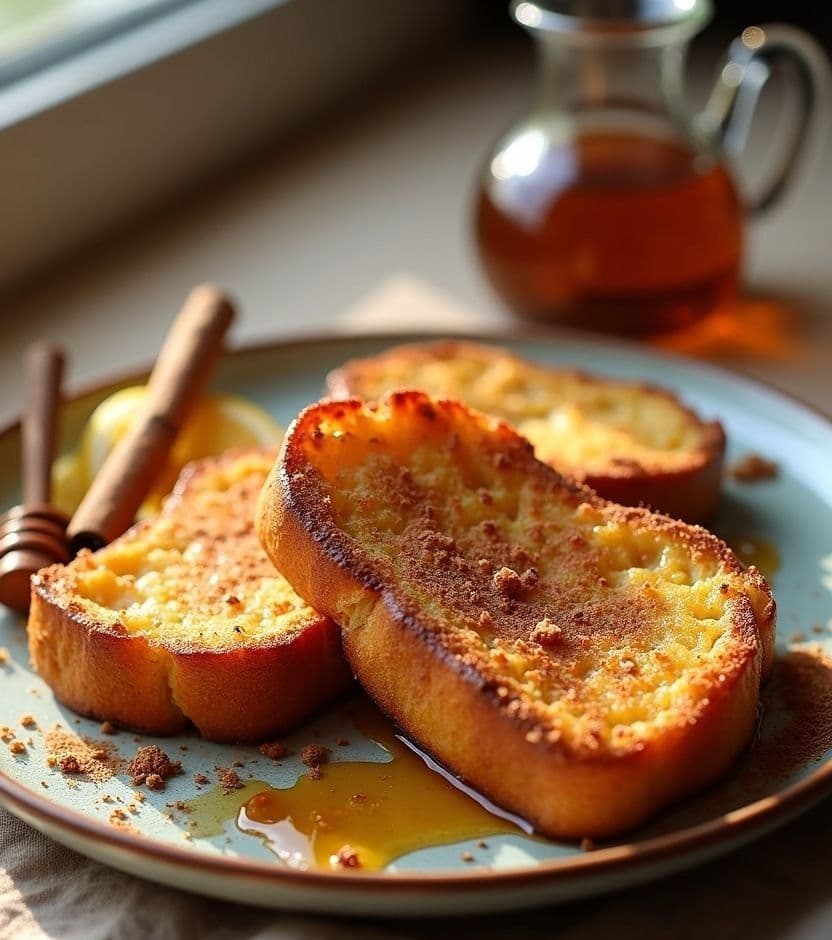
Torrijas are Spain's answer to French toast, and arguably the better one. Day-old bread soaked in warm cinnamon-infused milk, dipped in egg, fried in olive oil until golden, finished with cinnamon sugar and a drizzle of honey or red wine syrup. The technique came from medieval convents in Castile and was traditionally made during Semana Santa, when fasting rules pushed cooks to invent something rich without meat. Spanish torrijas use olive oil (not butter), that's the key flavour difference. Bigger, more substantial, more aromatic than any French toast you've had. Make them once, never go back.
Method
Infuse the milk.
Warm the milk with the cinnamon stick, lemon peel, and 2 tbsp sugar until it begins to simmer. Remove from heat and steep for 10 minutes. Strain.
Soak the bread.
Pour the warm infused milk into a shallow dish. Soak each bread slice for 10–15 seconds per side until fully saturated but not falling apart.
Egg and fry.
Dip each soaked slice in the beaten egg, coating both sides. Heat a generous amount of olive oil in a pan over medium heat. Fry each slice for 2–3 minutes per side until deeply golden.
Coat in cinnamon sugar.
Mix the remaining sugar with ground cinnamon. While the torrijas are still hot, roll or coat each one in the cinnamon-sugar mixture.
Rest and serve.
Arrange on a plate and drizzle with honey. Traditionally served cold after at least 4 hours in the fridge — the flavours meld and the texture improves completely.
Frequently asked questions
- What's the difference between torrijas and French toast?
- Three things: (1) The bread is soaked in flavoured milk first, then egg, French toast goes straight into custard. (2) Torrijas are fried in olive oil, French toast in butter. (3) The finish is cinnamon sugar and honey/wine syrup, not maple.
- Why does the bread need to be stale?
- Stale bread absorbs the milk without dissolving. Fresh bread turns to mush. If your bread is fresh, dry the slices in a low oven (250°F / 120°C) for 10 minutes to dehydrate them.
- Olive oil really? Won't it taste weird?
- It's authentic and tastes incredible, slightly fruity, slightly savoury under the sweet topping. Use a mild Spanish olive oil for frying, not a peppery extra-virgin. The difference is night and day from butter.
- Can I make these the day before?
- Yes, they're great cold or reheated. Store in a sealed container for up to 3 days. Some Spaniards prefer them after a day, when the syrup has soaked in fully.
- What's wine syrup (vino dulce)?
- Sweet red wine (Pedro Ximénez or Moscatel) reduced with sugar and cinnamon. Pour it over torrijas instead of honey for a more traditional Andalusian version. Equally good with both.
Rate this recipe
Join the Club to rate →