Bissara, warm fava bean soup
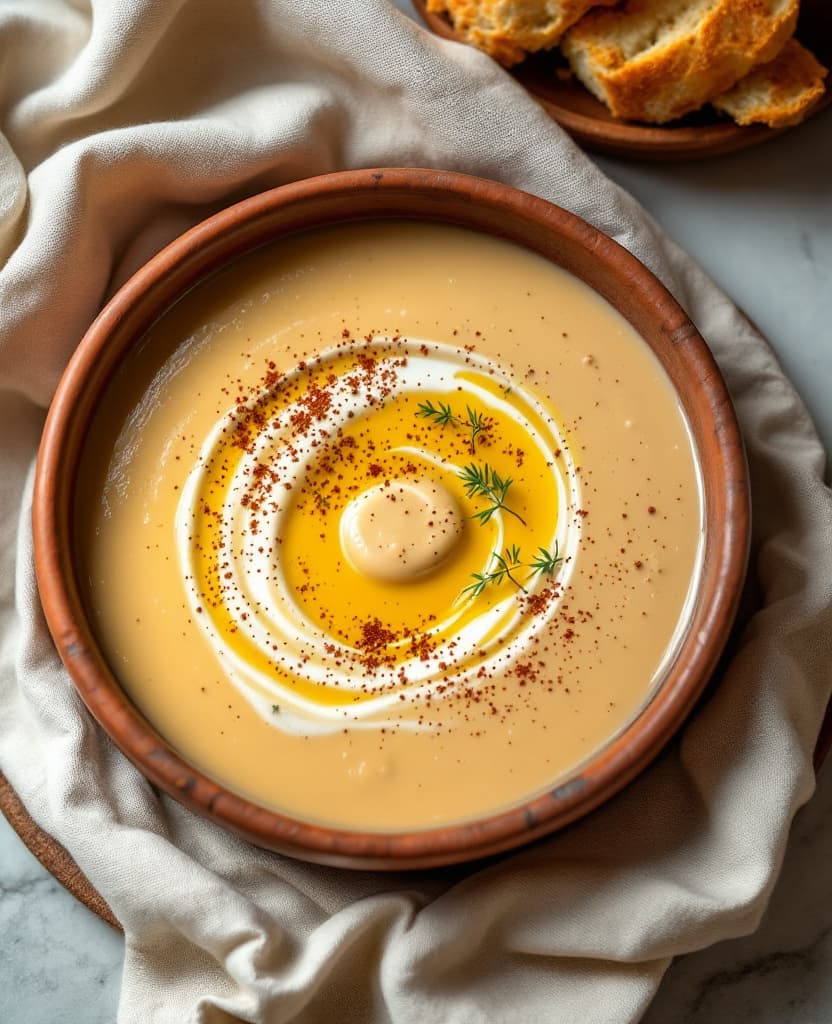
Dried split favas simmered with garlic until they collapse, blended silky, then finished with cumin, paprika and a heavy pour of olive oil. Northern Morocco's winter street breakfast, eaten at dawn with bread.
In the north of Morocco, in Tangier and Chefchaouen, winter mornings begin at a steel pot of bissara. Vendors ladle it out at dawn for a few dirhams: dried fava beans simmered with garlic until they collapse, blended smooth, seasoned with cumin and paprika, and finished with a pour of olive oil so generous it pools gold on the surface. You eat it standing, tearing bread and dragging it through the bowl. At home it asks almost nothing of you. One pot, a handful of pantry ingredients, an hour of gentle simmering. The result is thick, warming, and quietly rich, the kind of breakfast that holds you until lunch.
Method
Rinse the favas.
Tip the split fava beans into a sieve and rinse under cold water until it runs clear. Pick out any stray skins or stones. Split, peeled favas need no soaking.
Start the pot.
Put the beans, whole garlic cloves, 3 tablespoons of the olive oil, and the water in a heavy pot. Bring to a boil over high heat, then skim off the pale foam that rises to the surface.
Simmer until the beans collapse.
Lower the heat and simmer, partially covered, for 45-50 minutes, stirring now and then so nothing catches on the bottom. The beans are ready when they have broken down into a rough porridge. Stir in the cumin, paprika, and salt for the last 10 minutes.
Blend it silky.
Purée directly in the pot with an immersion blender until completely smooth. It should pour like heavy cream: loosen with hot water if it stands too thick, or simmer a few minutes more if too thin. Taste and adjust the salt and cumin.
Finish like a street vendor.
Ladle into warm bowls. Pour the remaining olive oil generously over each one, then dust with cumin and paprika and add a squeeze of lemon if you like. Serve very hot, with bread for scooping. Spoons optional.
Frequently asked questions
- What kind of fava beans do I need?
- Dried split, peeled fava beans, pale yellow in color. Middle Eastern and North African grocers sell them, often labeled foul or ful. Whole skin-on favas work too, but they need an overnight soak and peeling, so the split ones save you an hour.
- Can I make bissara with split peas instead?
- Some Moroccan households do, and a green split pea version exists across the country. It tastes sweeter and less earthy than the fava original. If this is your first bissara, start with favas: that is the bowl sold at dawn in Tangier.
- How thick should the finished soup be?
- Pourable, like heavy cream or a thin porridge. Street vendors keep it loose because it thickens within minutes off the heat. Err on the thin side in the pot and it will meet you halfway in the bowl.
- Is that much olive oil really necessary?
- Yes. The oil carries the cumin and paprika and gives the soup its richness, since there is no butter or stock underneath. A real bowl in Morocco arrives with the surface glossed gold. Use an oil good enough to drink.
- How long do leftovers keep?
- Four days covered in the fridge, where it sets into a thick paste. Reheat gently with a splash of hot water, whisking until smooth again. Or skip the water and spread it on warm bread as a dip, which is its own tradition.
Rate this recipe
Join the Club to rate →