
Crumpets with salted butter & jam
Yeasted batter cooked on a griddle until hundreds of holes appear on the surface — those holes trap the butter as it melts through. The definitive British weekday breakfast, ready in twenty minutes from scratch.
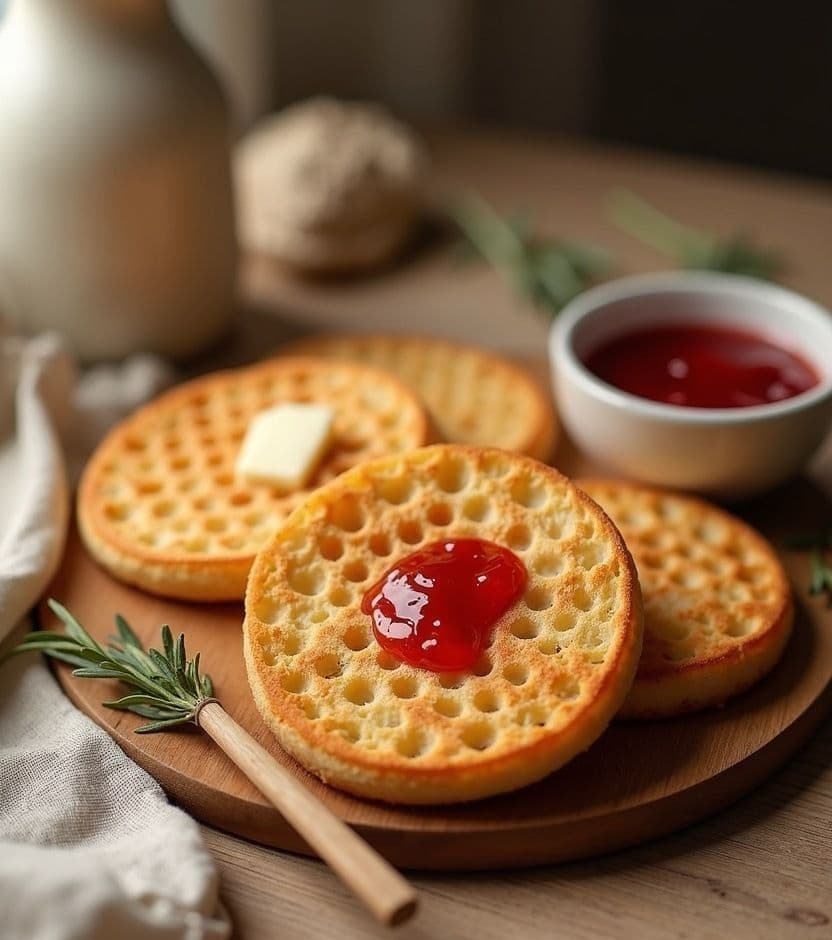
A British crumpet is not a pancake and not a muffin, it is its own thing. The defining feature is the holes: hundreds of small craters across the top, designed to catch melting butter and jam. The batter is loose, more like a thick pourable cream, and it rises in metal rings as it cooks. The bottom turns deep golden and crisp; the top stays pale and spongy. Toast them once they cool. Slather with cold butter that pools in every hole. A jar of good marmalade on the side. This is the most quintessentially English breakfast.
Method
Activate the yeast.
Mix the warm milk and water in a large bowl. Stir in the sugar and yeast. Leave for 10 minutes until foamy on the surface.
Make the batter.
Sift in the flour and salt. Whisk until completely smooth — no lumps. Cover with a damp cloth and leave in a warm place for 45 minutes to 1 hour until the batter has risen and is full of bubbles.
Add the bicarbonate.
Mix the bicarbonate of soda with 2 tablespoons of warm water and stir into the risen batter. The batter will bubble actively. This final reaction creates the famous holes.
Cook on the griddle.
Heat a flat griddle or heavy pan over medium-low heat. Butter the insides of your cooking rings and place them on the pan. Pour batter into each ring to about 1cm depth. Cook for 8–10 minutes until the surface is covered in holes and looks dry and matte. Do not flip — crumpets cook on one side only.
Toast and serve.
Remove the rings. The underside should be pale golden. Toast in a toaster or under a grill until the holes are slightly charred and the outside is crisp. Serve immediately with salted butter that melts through the holes, and jam on the side.
Frequently asked questions
- Why does my crumpet have no holes?
- Three usual reasons: the batter is too thick (should pour like double cream), the yeast hasn't bubbled enough (needs 60–90 minutes), or the pan is too hot, the surface sets before bubbles can rise.
- Do I really need crumpet rings?
- Yes. Without them the batter spreads flat. Egg rings, Mason jar lid rings, or tin can rings (both ends removed) all work. Lightly butter the inside before pouring.
- Can I make the batter ahead?
- Yes, refrigerate up to 24 hours after the rise. Bring to room temperature before cooking. Some bakers swear the flavor improves overnight.
- Can I freeze cooked crumpets?
- Yes. Once fully cool, freeze in a single layer, then bag. Toast straight from frozen, they crisp beautifully and the inside re-softens.
- What is the right thing to put on a crumpet?
- Cold butter is non-negotiable, it should be visibly melting into the holes. Then either jam (strawberry or marmalade), honey, Marmite for the savory route, or Cheddar cheese melted under a grill.
Rate this recipe
Join the Club to rate →