
Iced oat matcha, slow pour
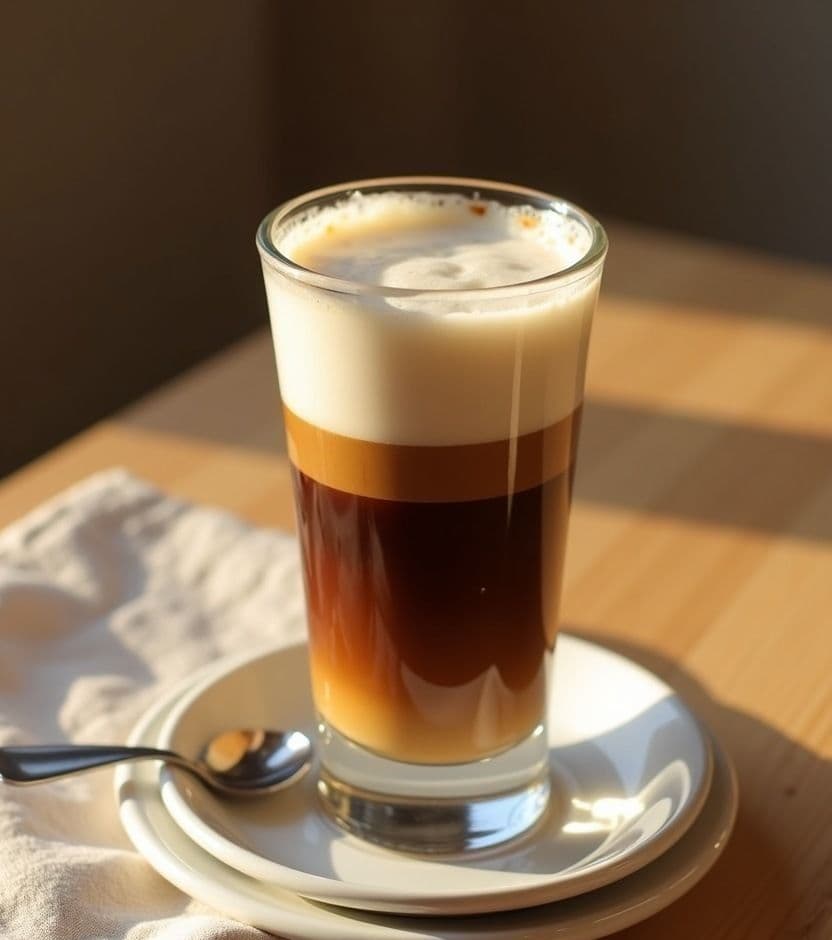
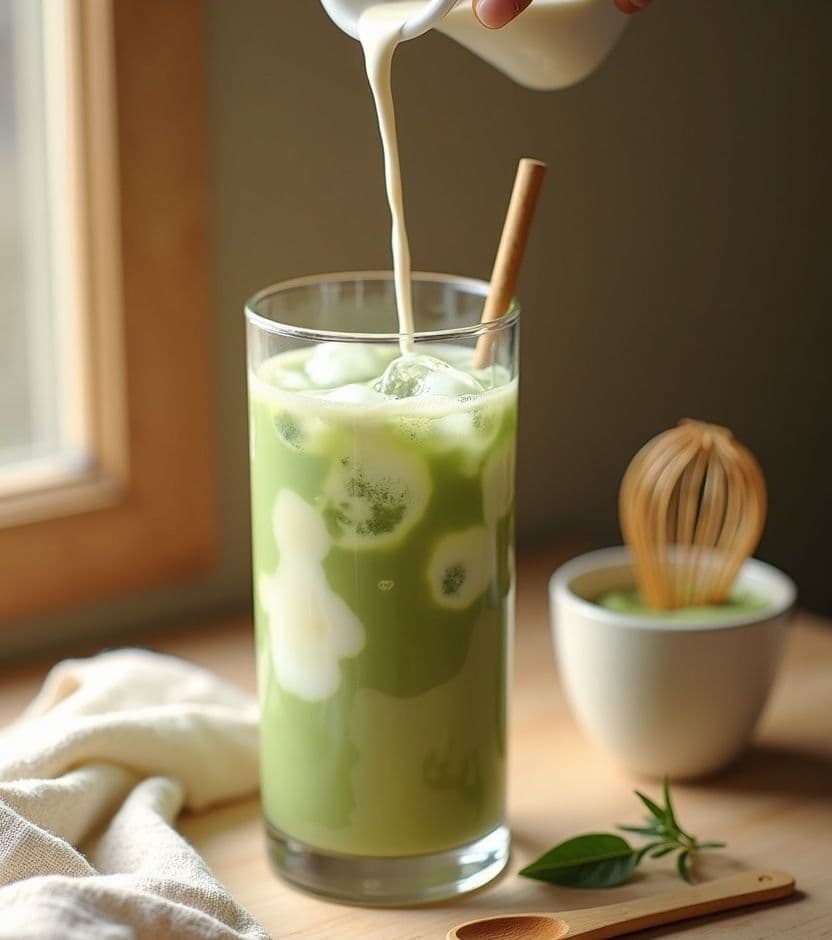
The iced oat matcha is the modern Japanese-cafe drink that took over slow mornings in the late 2010s. The technique is part Japanese (whisked ceremonial matcha) and part Pacific Northwest (oat milk over ice, slow pour). The result is a layered glass, bright green over creamy white, that delivers steady, calm caffeine without the jitter of coffee. The matcha quality matters: ceremonial grade, not culinary grade, makes the difference between bitter chalk and a smooth, vegetal cup. Sift to remove lumps. Use water at 70°C (not boiling). Pour the matcha over the back of a spoon for the clean layer. Three minutes, almost no equipment, deeply satisfying.
🎃 On the Halloween table as Witchs Brew · see the costume
Method
Sift and whisk the matcha.
Sift the matcha into a small bowl to remove lumps. Add hot water and whisk in a fast W or M motion until completely smooth and slightly frothy.
Build the glass.
Fill a tall glass with ice. Pour the oat milk over the ice. Add maple syrup if using and stir gently.
Pour the matcha.
Slowly pour the matcha concentrate over the back of a spoon held against the glass rim. This creates the beautiful green-on-white layer.
Frequently asked questions
- What's the difference between ceremonial and culinary matcha?
- Ceremonial grade is made from young first-harvest leaves, stone-ground, bright vivid green, vegetal and slightly sweet. Culinary grade is older leaves, more bitter, duller in color. For drinking matcha straight, only ceremonial works.
- Why not use boiling water?
- Boiling water (100°C) makes matcha bitter and damages the L-theanine compounds. 70°C is the sweet spot, hot enough to dissolve the powder, cool enough to preserve the flavour and umami.
- How much caffeine is in matcha?
- About 70mg per teaspoon, similar to a shot of espresso, but the L-theanine in matcha balances it, creating a calmer alertness without spikes or crashes.
- Can I use a regular whisk?
- A bamboo chasen (matcha whisk) gives the smoothest result, but a small metal whisk works. A handheld frother is also acceptable. Avoid blenders, they introduce too much air.
- Why oat milk specifically?
- Oat milk's subtle natural sweetness pairs with matcha's vegetal notes without overpowering them. Almond milk is too thin; cow's milk fights the matcha; coconut milk dominates. Oat is the consensus winner.
Rate this recipe
Join the Club to rate →