

Juk, Korean rice porridge
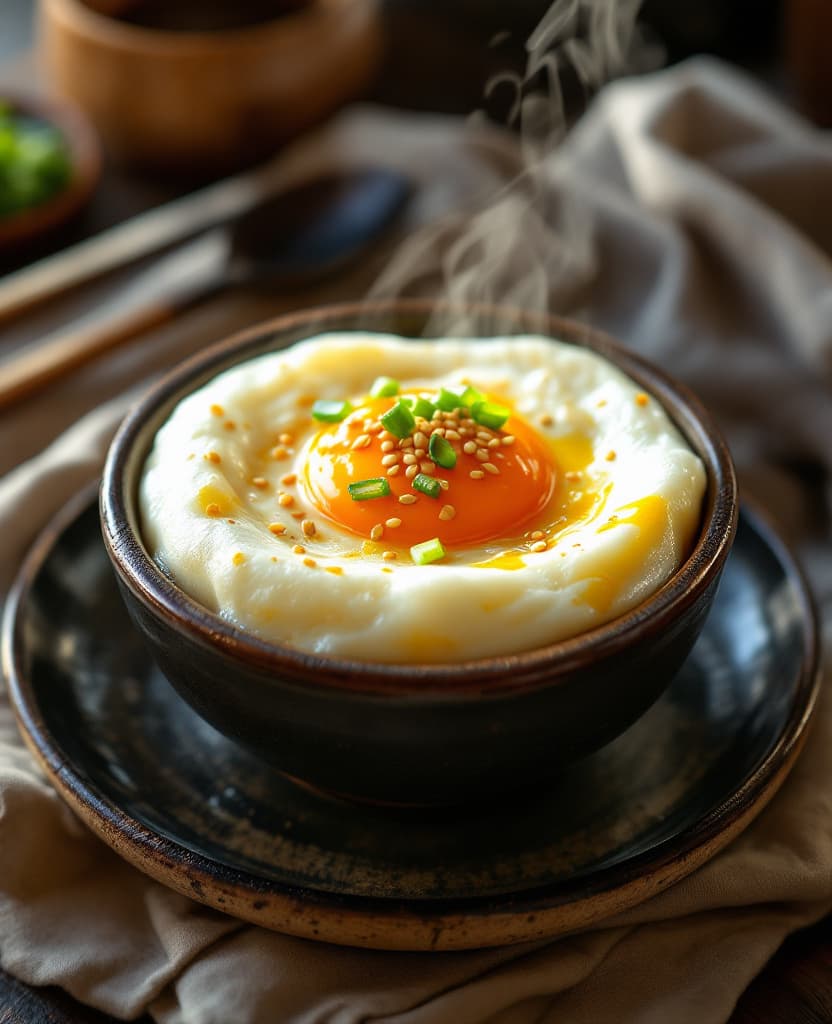
White rice cooked until silky-smooth in a rich broth. Korea's most comforting morning bowl — simple, restoring, and endlessly adaptable.
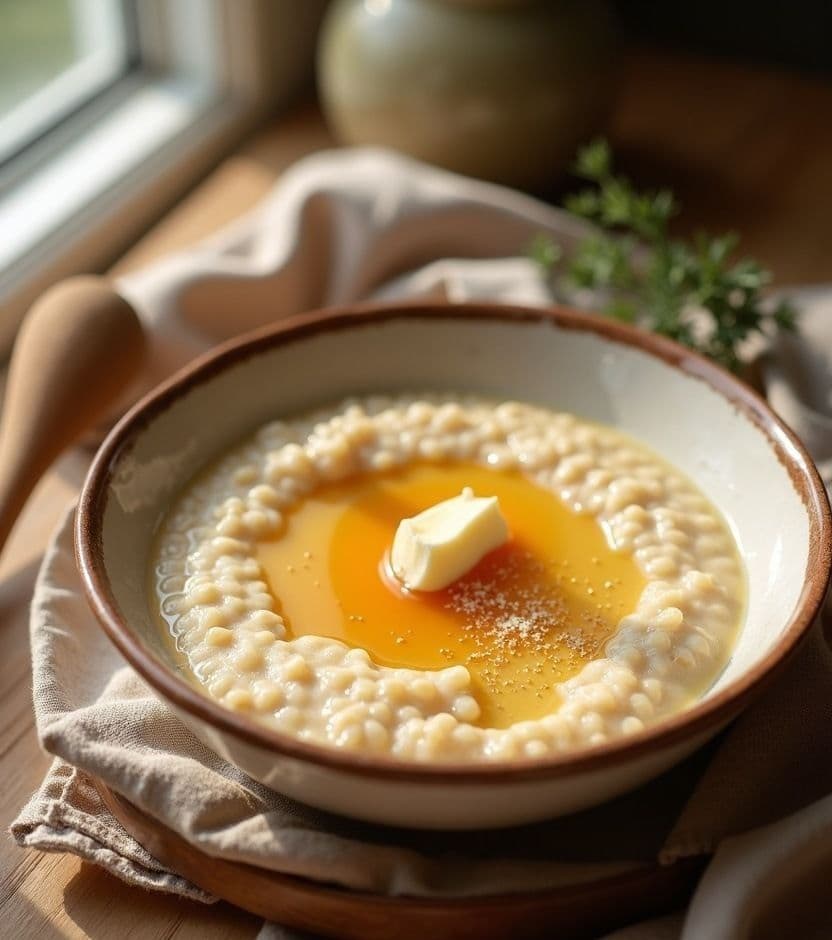
Juk (죽) is the Korean rice porridge that grandmothers feed children when they're sick, hungover adults make at 9am, and restaurants serve as elaborate multi-bowl breakfasts. The technique is gentle: short-grain rice simmered slowly in broth (chicken or vegetable) until the grains burst and turn creamy. The base is plain, soy sauce, sesame oil, salt, and the toppings carry the flavor: pickled vegetables, kimchi, soft-boiled egg, scallions, sesame seeds. Korean juk is a low-effort breakfast that tastes like care. Forty minutes of mostly hands-off simmering, then a quiet bowl with multiple small toppings to assemble per spoonful.
🎃 On the Halloween table as Full-Moon Porridge · see the costume
Method
Soak the rice.
Rinse rice until water runs clear. Soak in cold water for 30 minutes if time allows. Drain.
Cook low and slow.
Combine rice and broth in a medium saucepan. Bring to the boil, then reduce to the lowest heat, partially covered. Cook 25–30 minutes, stirring every 5 minutes, until the rice has completely dissolved into a creamy, porridge-like consistency.
Season and serve.
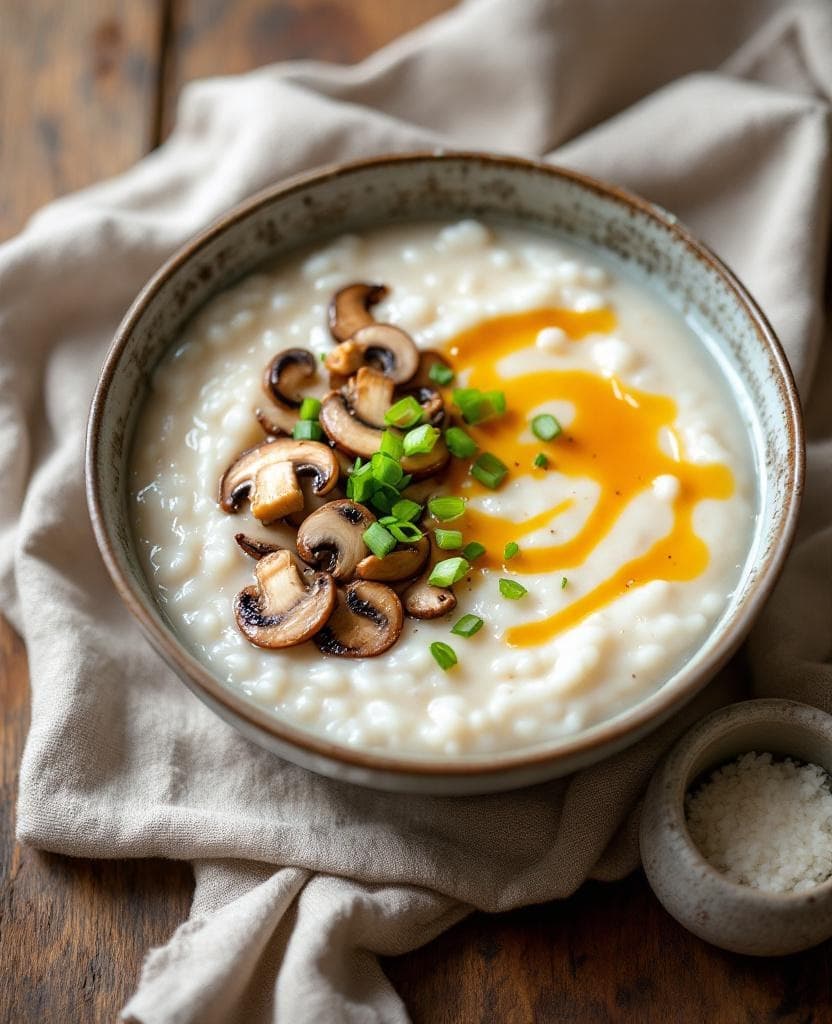
Stir in sesame oil, soy sauce, and salt. Taste. Serve in stone bowls if available. Top with sliced green onion. Accompany with kimchi if desired.
Frequently asked questions
- What rice is best for juk?
- Short-grain white rice (the same kind used for sushi or risotto), it releases starch as it cooks, creating the creamy porridge texture. Long-grain rice stays separate; jasmine fragrance fights the broth.
- Can I make juk in a rice cooker?
- Many Korean rice cookers have a "juk" or "porridge" mode. If yours does, follow the manual, usually 1 cup rice to 7 cups water, run the porridge cycle. Otherwise stovetop is fine.
- What toppings work?
- Classic: scallions, sesame oil, kimchi, soy sauce, soft-boiled egg, sesame seeds, gim (roasted seaweed sheets crumbled on top). Banchan (small Korean side dishes) on the side. Make a few, half the joy is mixing per bite.
- Is juk healthy?
- Yes, naturally low-calorie (about 220 per bowl), easy to digest. Korean tradition prescribes juk for upset stomachs, post-illness recovery, and elderly nutrition. Plain juk is one of the most gentle foods you can eat.
- How long does cooked juk keep?
- Refrigerate up to 3 days. The rice thickens as it cools, reheat with extra broth or water (½ cup per portion). Microwave or stovetop both work. Add fresh toppings each time.
Rate this recipe
Join the Club to rate →