


Sinangag, Filipino garlic fried rice
Cold rice fried in abundant garlic until golden and aromatic. The backbone of every Filipino breakfast — served alongside almost everything.
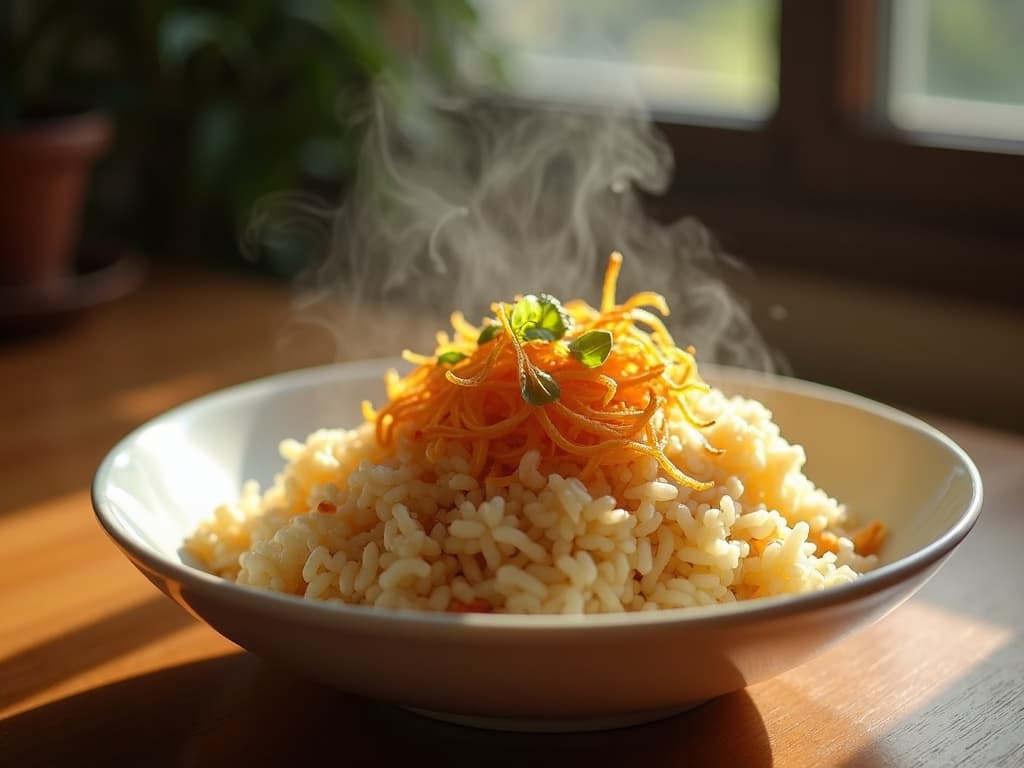
Sinangag is the Filipino garlic fried rice that anchors almost every Filipino breakfast (alongside an egg and some kind of meat, the "silog" formula). The recipe is deceptively simple: day-old rice, lots of garlic, a little oil, fish sauce, scallions. The skill is in two specific moves: slow-frying the garlic until it's deeply golden and crisp (but not burnt), and using cold day-old rice that won't steam in the pan. Done right, every grain of rice is coated in garlic oil and slightly crisped. Done wrong, it's mushy and bland. Ten minutes of careful work for a breakfast staple that holds up to anything you put alongside it.
Method
Fry the garlic.
Heat the oil in a wok or large frying pan over medium-low heat. Add the minced garlic and cook slowly, stirring constantly, for 4–6 minutes until golden and crispy. Remove half the garlic with a slotted spoon and set aside for garnish.
Fry the rice.
Turn the heat up to high. Add the cold cooked rice to the pan. Break up any clumps with a spatula. Stir-fry for 3–4 minutes until every grain is coated in garlic oil and starting to crisp at the edges.
Season and serve.
Season with fish sauce and white pepper. Toss well. Pile onto plates and top with the reserved crispy garlic and sliced spring onions. Serve as part of a tapsilog breakfast with eggs and meat.
Frequently asked questions
- Why does the rice need to be day-old?
- Fresh-cooked rice has too much moisture, it steams instead of frying and clumps together. Day-old rice has dried out slightly, separates into individual grains, and crisps in the pan. The texture difference is dramatic.
- What rice is best?
- Filipino sinangag is traditionally made with jasmine rice, slightly sticky, fragrant. Long-grain American rice works but is less authentic. Avoid arborio or short-grain; they don't separate properly.
- How do I avoid burning the garlic?
- Low and slow. Medium-low heat, constant stirring for 4–6 minutes. The moment the garlic turns golden, the heat needs to come down or you remove half (which becomes crispy garnish). Burnt garlic is bitter and ruins the dish.
- Is fish sauce necessary?
- Filipino sinangag traditionally uses fish sauce (patis) for umami. You can substitute soy sauce, but the flavor changes, soy sauce is sweeter and less funky. A pinch of salt + 1 tsp soy sauce is the closest substitute.
- What is the "silog" breakfast?
- Silog is a portmanteau of sinangag (garlic rice) + itlog (egg), combined with a meat. Common varieties: tapsilog (cured beef), longsilog (sweet sausage), tocilog (cured pork). All built around sinangag as the base.
Rate this recipe
Join the Club to rate →