

Bougatsa, warm custard pie
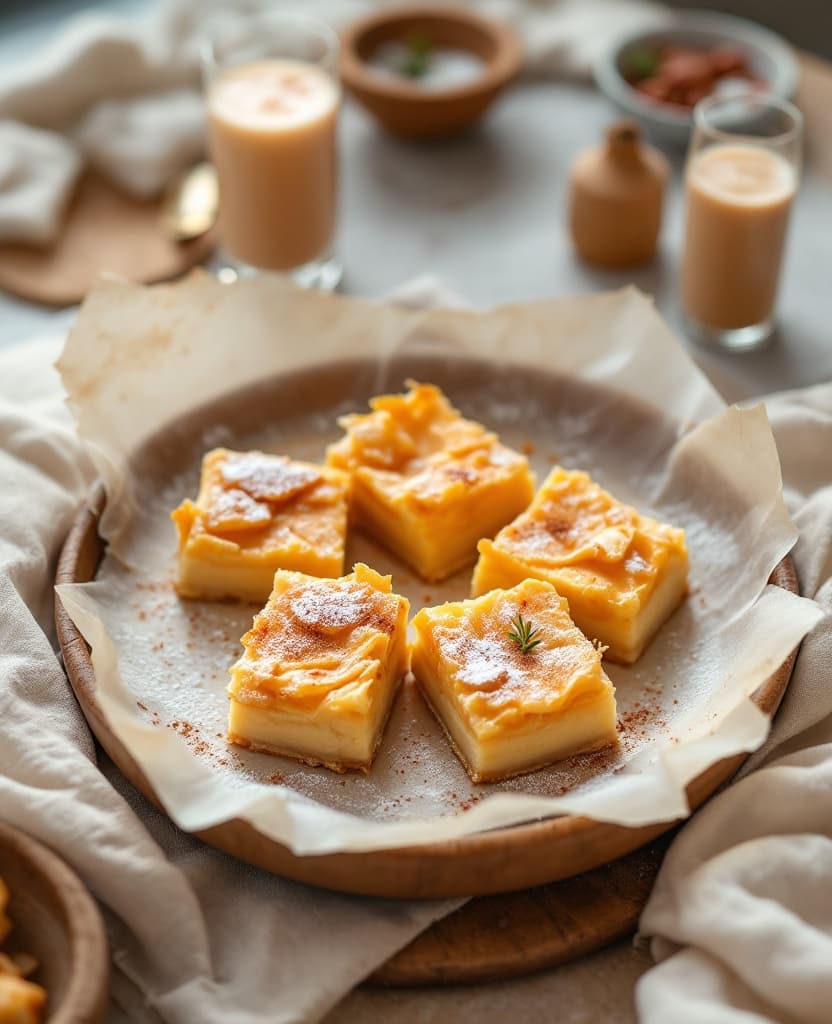
Silky semolina custard baked inside crisp buttered phyllo, chopped into warm squares and buried in icing sugar and cinnamon. The Thessaloniki bakery breakfast, best eaten standing up with a cold frappe.
In Thessaloniki, bougatsa is breakfast. Bakeries pull whole trays from the oven before seven, chop them into rough squares with a bench scraper, and hand them over warm in paper, icing sugar and cinnamon drifting everywhere. The pleasure is the contrast: phyllo baked to a deep gold that shatters at the first bite, and a semolina custard underneath that stays soft, milky, and barely sweet. Locals eat it standing at the counter, with a cold frappe sweating in the other hand. At home it asks for one saucepan, one baking dish, and a little patience with the phyllo. The custard comes together in ten minutes. The oven does the rest.
Method
Make the semolina custard.
Warm the milk, sugar, and salt in a saucepan over medium heat until steaming. Rain in the semolina while whisking constantly and cook for 5-6 minutes, until it thickens to a loose pudding. Off the heat, whisk in the eggs one at a time, then the vanilla and 2 tbsp of the melted butter.
Build the base.
Brush a 9x13 inch baking dish with melted butter. Lay in 7 phyllo sheets one at a time, brushing each with butter and letting the edges hang over the sides. Keep the waiting sheets under a barely damp towel so they stay pliable.
Fill and fold.
Pour in the warm custard and smooth it to the corners. Fold the overhanging phyllo over the filling, then layer the remaining 5 sheets on top, buttering each one. Tuck the top edges down the sides and brush the surface generously with the last of the butter.
Bake until deep gold.
Bake at 350°F (180°C) for 40-45 minutes, until the top is burnished and audibly crisp when tapped. The custard will puff slightly, then settle. Rest for 15 minutes so the squares hold their shape.
Chop, dust, and eat warm.
Cut into rough squares the way the bakeries do, with a sharp knife and no ceremony. Dust generously with icing sugar, then a finer shower of cinnamon. Serve warm, ideally with a cold frappe, while the phyllo still shatters.
Frequently asked questions
- Does the semolina need to be fine or coarse?
- Fine semolina, always. It cooks into a silky, pourable custard in a few minutes. Coarse semolina stays gritty and never fully softens. If coarse is all you have, pulse it briefly in a blender before starting.
- Why did my custard come out stiff and rubbery?
- It cooked too long on the stove. The custard should still pour slowly when it goes into the phyllo, because it sets further in the oven. Take it off the heat at the loose pudding stage, even if it looks underdone.
- Can I assemble bougatsa the night before?
- Yes. Assemble it fully, cover, and refrigerate unbaked overnight, then bake straight from the fridge with 5 extra minutes. Already-baked bougatsa re-crisps well in a 350°F oven for about 10 minutes.
- My phyllo keeps tearing. Is the batch ruined?
- No. Patch torn sheets together in the base and middle layers, where the butter glues everything into one crust anyway. Keep unused sheets covered with a barely damp towel and work at a steady pace rather than a fast one.
- Is bougatsa always sweet?
- No. Thessaloniki bakeries also fill it with salty cheese or spiced minced meat, and regulars order by filling. The semolina custard version, bougatsa me krema, is the classic breakfast one, and the only one that gets the sugar and cinnamon dusting.
Rate this recipe
Join the Club to rate →