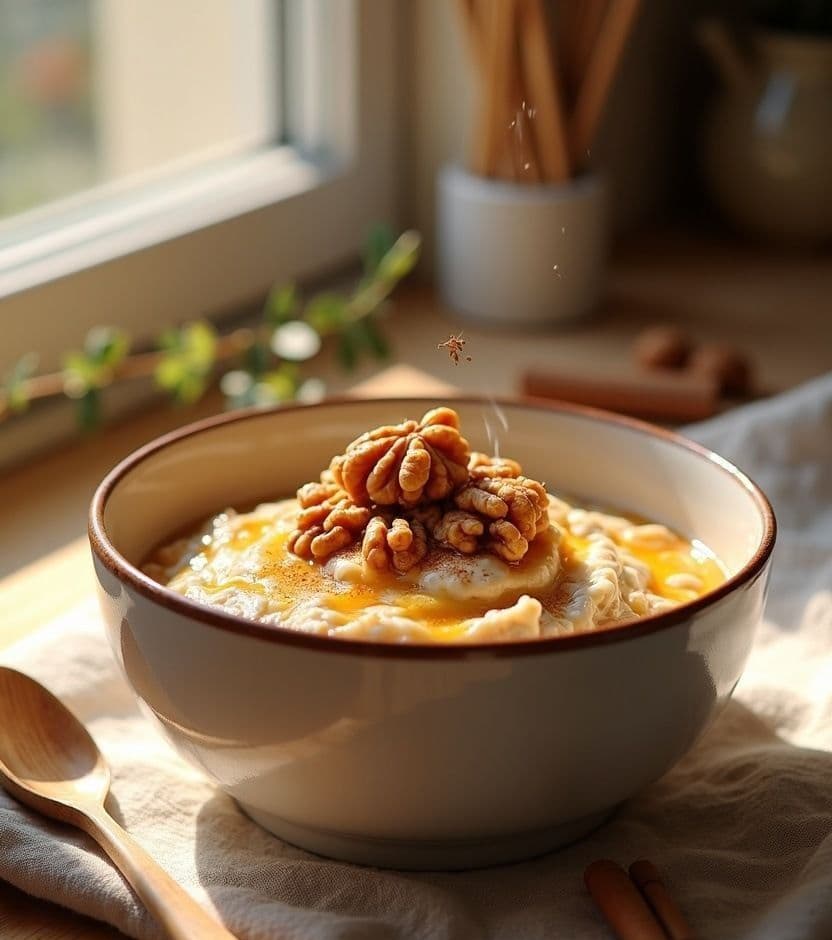



Tapioca, Brazil's one-minute crepe
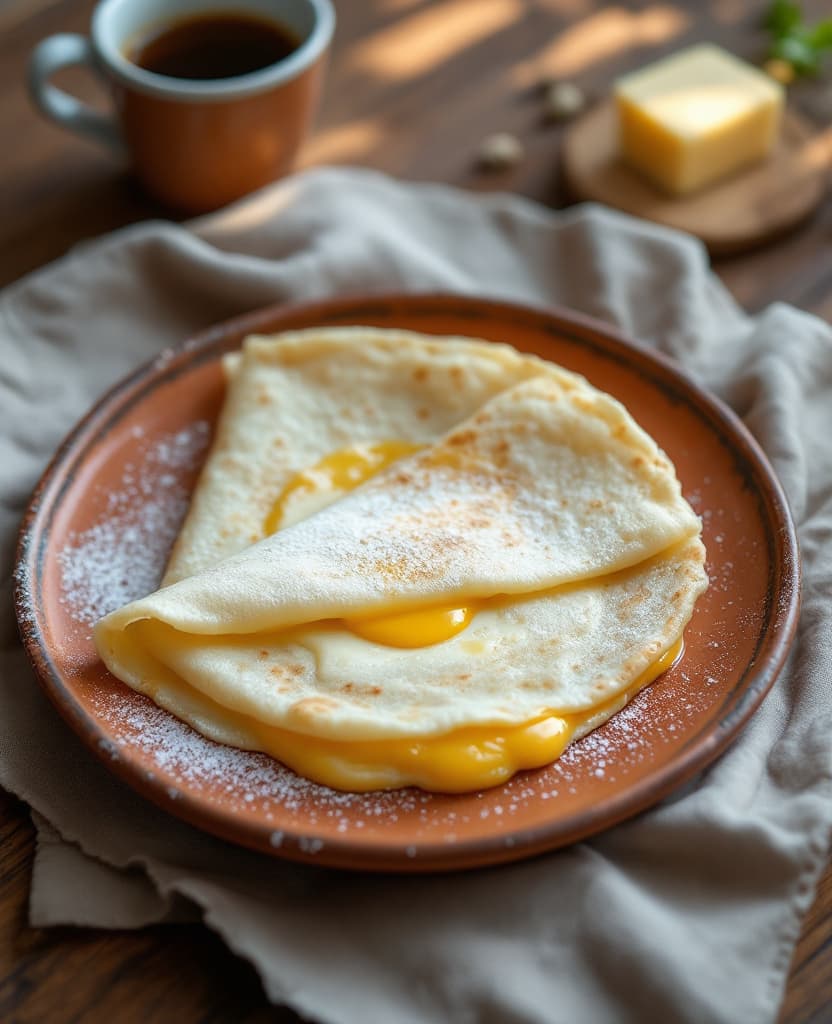
Hydrated cassava starch sifted into a hot skillet, set into a chewy white crepe in about a minute, then folded over squeaky queijo coalho and melting butter. The Northeast's daily griddle ritual.
In Brazil's Northeast, this is what morning sounds like: a dry whisper of starch hitting a hot pan, then a quiet minute while it sets. Tapioca is cassava starch, hydrated until it feels like damp sand, sifted into a skillet, and fused by heat alone into a chewy white crepe. No batter, no eggs, no oil. Folded over salty queijo coalho and a knob of butter, it goes from pan to plate before your coffee cools. Street vendors in Recife and Fortaleza have made it this way for generations, and home cooks make it daily without measuring a thing. Once your hands learn the texture, so will you.
Method
Hydrate the starch.
Put the tapioca starch in a wide bowl with the salt. Sprinkle in the water a tablespoon at a time, rubbing it through with your fingertips. Stop when it feels like damp sand: it should clump when squeezed, then crumble apart at a touch.
Sift it fine.
Press the damp starch through a fine-mesh sieve into a clean bowl, breaking up every clump. You want light, even, snow-like crumbs. This is the step that decides the texture of the crepe, so take the extra two minutes.
Set the first crepe.
Heat a small nonstick skillet over medium heat until a stray crumb sizzles faintly on contact. Scatter half the sifted starch in an even layer to cover the base and smooth it gently with the back of a spoon. In about one minute the granules fuse into a single white crepe and the edges lift free of the pan.
Melt the cheese.
Flip the crepe and lay the queijo coalho over one half, then dot with butter. Cover the pan for 30 seconds, just until the cheese softens and slumps. Fold the empty half over the filling and press lightly to seal.
Serve hot, then make the next.
Slide the folded crepe onto a plate and eat it right away, while the outside is chewy and the cheese still pulls. Repeat with the remaining starch and filling. In the Northeast this is breakfast with sweet black coffee, made one crepe at a time.
Frequently asked questions
- Is tapioca starch the same as tapioca flour?
- In the US, yes: bags labeled tapioca flour or tapioca starch are the same unfermented cassava starch Brazilians call polvilho doce. Do not use tapioca pearls, and skip polvilho azedo, the fermented sour starch, which behaves differently in the pan.
- Why did my crepe crack instead of holding together?
- It was too dry. Properly hydrated starch clumps firmly when you squeeze a handful. Sprinkle in more water a teaspoon at a time, rub it through, and sift again. If it turns pasty you went too far, so work in a spoonful of dry starch to bring it back.
- What can I use instead of queijo coalho?
- Halloumi is the closest match: salty, squeaky, and happy under heat. Queso para freír works too. Low-moisture mozzarella melts more than coalho would, but it still makes a very good crepe.
- Can I hydrate the starch ahead of time?
- Yes. Keep it in an airtight container in the refrigerator for up to 3 days. It compacts as it sits, so break it up and sift it again just before it hits the pan.
- Is tapioca gluten free?
- Naturally, yes. It is pure cassava starch with no wheat anywhere near it. If you cook for someone with celiac disease, check the labels on packaged goma and the cheese for cross-contamination, but the crepe itself needs no substitutions.
Rate this recipe
Join the Club to rate →