



There is a quiet kind of freedom in knowing exactly what you are making for breakfast before your feet hit the floor. No scrolling, no deciding, no standing in front of the fridge at 7 a.m. wondering if you have the energy to boil water. Just a rhythm, repeated every week, that makes the morning feel like yours.
At Braffess we believe the slow morning is not about having more time. It is about removing the friction that steals it. And eggs, humble and endlessly versatile, are the best tool for that. If you want the full picture first, our guide to breakfast egg recipes covers the techniques behind everything below.
Here is what this guide gives you: seven egg recipes, one for each day of the week, each designed to take under 15 minutes, require minimal cleanup, and taste good enough that you will actually want to repeat them.
Key takeawayA weekly egg rotation works because it removes decision fatigue, keeps your grocery list predictable, and still delivers variety. These seven recipes cover every mood, from quiet weekday mornings to slower weekend rituals.
Whether you are a soft-boiled purist or someone who needs a full skillet situation to feel human before noon, there is a slot for you in this rotation.
Why a weekly egg rotation actually works
Most people already eat eggs several times a week. The problem is not the ingredient, it is the lack of a system. Without one you default to the same two recipes on autopilot, usually scrambled and occasionally fried, and breakfast quietly becomes something you endure rather than enjoy.
A rotation changes that. When you assign a recipe to a day, a few things happen:
- Grocery shopping gets simpler. You buy the same base ingredients every week with small variations. One dozen eggs, one block of feta, a bag of spinach, some good bread.
- Your skill builds naturally. Repeating the same technique weekly means you get genuinely good at it. Your poached eggs stop breaking. Your omelet stops tearing.
- The morning feels intentional. There is something grounding about knowing Tuesday is soft-boiled egg day. It is a small ritual that signals the start of something.
According to research on habit formation from the American Psychological Association, routines reduce cognitive load and make positive behaviours easier to sustain long term. A breakfast rotation is essentially a habit stack, and eggs are the perfect anchor.
The seven recipes below are organised by effort across the week: lighter and faster on weekdays, a little more leisurely on weekends.
The 7-day egg rotation
Here is the full weekly lineup at a glance before we get into each recipe.
| Day | Recipe | Cook time | Effort |
|---|---|---|---|
| Monday | Soft-Boiled Eggs on Toast | 8 min | Low |
| Tuesday | Scrambled Eggs with Herbs | 10 min | Low |
| Wednesday | Egg Muffin Cups | 25 min | Medium |
| Thursday | Fried Egg with Avocado | 8 min | Low |
| Friday | Classic French Omelet | 12 min | Medium |
| Saturday | Shakshuka | 25 min | Medium |
| Sunday | Poached Eggs on Sourdough | 15 min | Medium |
Each recipe below includes the core technique, a short ingredient list, and a variation to keep it interesting when the season or your mood shifts.
Monday
Soft-boiled eggs on toast
Monday calls for something reliable and almost meditative. Soft-boiled eggs deliver that. The process is completely hands-off once the water is boiling, which means you can make coffee, open a window, or just stand quietly for six minutes.
What you need
- 2 large eggs
- 2 slices of good bread, sourdough or rye work best
- Flaky salt, black pepper, a knob of butter
How to make it
- Bring a small pot of water to a rolling boil.
- Gently lower the eggs in with a spoon. Set a timer for exactly 6 minutes 30 seconds for a jammy yolk.
- Transfer to an ice bath for 1 minute, then peel.
- Toast the bread, butter it, halve the eggs, and season generously.
Variation: slice the eggs over dressed arugula with a drizzle of olive oil on weeks when you have an extra two minutes.
Tuesday
Scrambled eggs with herbs
Most people overcook scrambled eggs. The Braffess approach is low heat, constant movement, and pulling the pan off the burner while the eggs are still slightly underdone. They finish in the residual heat and come out silky rather than rubbery.
What you need
- 3 large eggs
- 1 tablespoon butter
- 2 tablespoons crème fraîche or sour cream
- Fresh chives or dill, chopped
- Salt and white pepper
How to make it
- Whisk the eggs with a pinch of salt.
- Melt the butter in a non-stick pan over low heat. Add the eggs.
- Stir constantly with a rubber spatula, moving the eggs in slow folds.
- When they are 80% set, remove from the heat and stir in the crème fraîche.
- Finish with fresh herbs and white pepper.
Variation: add a tablespoon of everything bagel seasoning and serve on a toasted English muffin for a Tuesday that feels more like a treat.
Wednesday
Egg muffin cups
Wednesday is the practical one. Egg muffin cups are made on Sunday or Monday evening, refrigerated, and reheated in 60 seconds all week. They are the only recipe here that needs advance planning, and that planning pays off for several days.
What you need, makes 6
- 6 large eggs
- 1/4 cup whole milk
- 1/2 cup diced bell pepper
- 1/4 cup crumbled feta
- A handful of baby spinach, roughly chopped
- Salt, pepper, olive oil
How to make it
- Heat the oven to 375°F (190°C). Grease a muffin tin with olive oil.
- Whisk the eggs and milk together with salt and pepper.
- Divide the vegetables and feta evenly across the cups.
- Pour the egg mixture over the top, filling each cup about three quarters full.
- Bake for 18 to 20 minutes until puffed and set.
- Cool, then refrigerate. Reheat for 60 seconds in the microwave.
Variation: swap the feta for shredded gruyère and press a slice of prosciutto into each cup before adding the egg mixture.
Thursday
Fried egg with avocado
By Thursday you want something fast and satisfying that takes almost no thought. A fried egg over sliced avocado on toast is exactly that. The trick is a fully set white with a runny yolk, which means starting with a cold pan and letting it heat up gradually with the egg already in it.
What you need
- 2 large eggs
- 1 ripe avocado
- 2 slices of bread
- Olive oil, red pepper flakes, flaky salt, lemon
How to make it
- Put a non-stick pan over medium-low heat with a thin layer of olive oil.
- Crack the eggs into the cool pan before it is fully hot.
- Cook undisturbed for 3 to 4 minutes until the whites are set and the edges lightly crisped.
- Toast the bread, smash the avocado on top with a fork, squeeze over lemon.
- Lay the eggs on top and season with red pepper flakes and flaky salt.
Variation: add a thin slice of smoked salmon under the egg for a Thursday that feels more like a weekend.
Friday
Classic French omelet
Friday deserves a little technique. The French omelet, pale and barely coloured outside, creamy and custardy inside, is the benchmark of egg cookery. It takes practice, which is exactly why it belongs in a weekly rotation. After four or five Fridays you will have it.
What you need
- 3 large eggs
- 1 tablespoon butter
- 2 tablespoons soft goat cheese or gruyère
- Fresh tarragon or chives
- Salt
How to make it
- Whisk the eggs vigorously with a pinch of salt until combined and slightly frothy.
- Heat the butter in a small non-stick pan over medium-high heat until foaming.
- Add the eggs and immediately stir with a fork while shaking the pan.
- As curds form, tilt the pan and fold the omelet over the filling.
- Roll onto a plate seam-side down. It should be pale gold, not browned.
Variation: fill with sautéed mushrooms and a teaspoon of Dijon for a more savoury Friday finish.
Saturday
Shakshuka
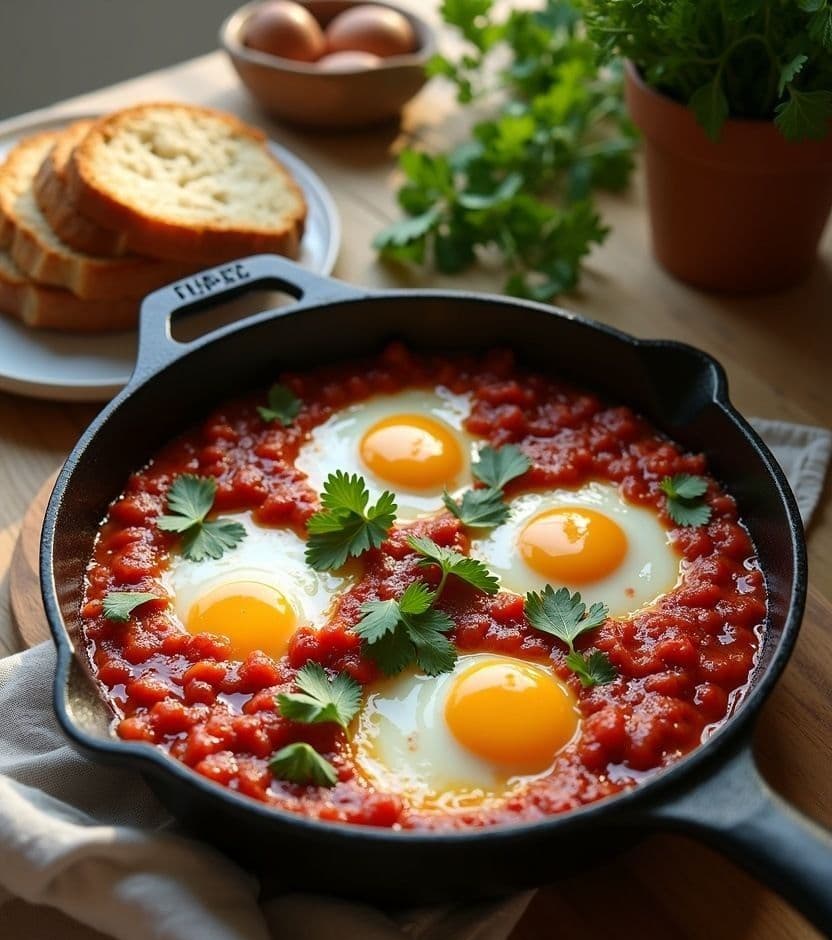
Saturday is the slow one. Shakshuka, eggs poached directly in a spiced tomato sauce, is a one-pan recipe that fills the kitchen with the kind of smell that makes people wander in from other rooms. It takes about 25 minutes, which is exactly right for a weekend morning.
What you need
- 4 large eggs
- 1 can (14 oz) crushed tomatoes
- 1/2 yellow onion, diced
- 2 garlic cloves, minced
- 1 teaspoon cumin, 1 teaspoon paprika, a pinch of cayenne
- Olive oil, salt, fresh parsley
- Crusty bread to serve
How to make it
- Heat olive oil in a wide skillet over medium heat. Soften the onion, about 5 minutes.
- Add the garlic and spices, cook 1 minute until fragrant.
- Pour in the tomatoes, season with salt, simmer 10 minutes.
- Make four wells in the sauce and crack an egg into each.
- Cover and cook on low for 5 to 7 minutes until the whites set and the yolks run.
- Finish with parsley and serve straight from the pan with bread.
Variation: stir a tablespoon of harissa into the tomato base before adding the eggs for a deeper, spicier version. A dollop of labneh or Greek yoghurt on top cools it down beautifully.
Sunday
Poached eggs on sourdough
Sunday is when you slow all the way down. Poached eggs have a reputation for being finicky, but the technique is straightforward once you understand what the egg needs: barely simmering water, a splash of vinegar, and a gentle swirl.
What you need
- 2 large eggs, very fresh eggs poach best
- 1 tablespoon white wine vinegar
- 2 thick slices of sourdough
- Butter, flaky salt, black pepper
- Optional: wilted spinach, hollandaise, or just a good olive oil
How to make it
- Fill a saucepan with 3 inches of water. Add the vinegar and bring to a gentle simmer, not a boil.
- Crack each egg into a small cup or ramekin.
- Stir the water into a gentle swirl, then slide the egg in from the cup.
- Cook 3 minutes for a runny yolk. Lift out with a slotted spoon and blot on paper towel.
- Serve on buttered sourdough with flaky salt and a crack of pepper.
Variation: lay the poached egg over wilted spinach and a smear of ricotta for a Sunday that leans into the season.
Tips for making the rotation stick
The hardest part of any routine is not the first week. It is week three, when the novelty has worn off and life gets in the way. A few things that help.
Keep the pantry stocked, not overstocked
You do not need a full mise en place. You need a carton of eggs, one good fat (butter or olive oil), bread, and two or three flavour boosters that rotate seasonally: fresh herbs in summer, a good hot sauce in winter, aged cheese year round. USDA FoodData Central puts a single large egg at just over 6 grams of protein, which is a lot of breakfast for the 20 to 30 cents it costs. Our breakfast pantry guide covers the rest of the shelf.
Batch one, not all
Do not try to prep every breakfast for the week. It does not work and it is not the point. The one exception is Wednesday's egg muffin cups, which genuinely benefit from being made ahead. Everything else takes under 15 minutes and is better made fresh.
Adjust by season, not by boredom
The rotation stays the same. What changes is the garnish, the bread, the herb. Soft-boiled eggs in January go on dark rye with a smear of mustard. In July they go on toast with tomatoes from the garden. The technique is fixed, the season does the rest, and our month-by-month guide tells you what is worth buying when.
Give yourself one free day
If you miss a day or swap two recipes around, that is fine. The rotation is a guide, not a contract. The goal is that by the end of the month you have made all seven, you know which ones feel like yours, and breakfast has quietly become the easiest part of your day.
Start with Monday
You do not need to commit to all seven days to get value from this. Start with Monday. Make the soft-boiled eggs. See how it feels to walk into Tuesday already knowing what breakfast looks like.
The slow morning is not a luxury. It is a decision made the night before, a short list of ingredients on the counter, and a recipe you have made enough times that your hands know what to do. Eggs are the easiest place to start building that. When you are ready for more, the full recipe library is right here, and the history of breakfast is worth a read on a slow Sunday.