Apfelpfannkuchen, skillet apple pancake
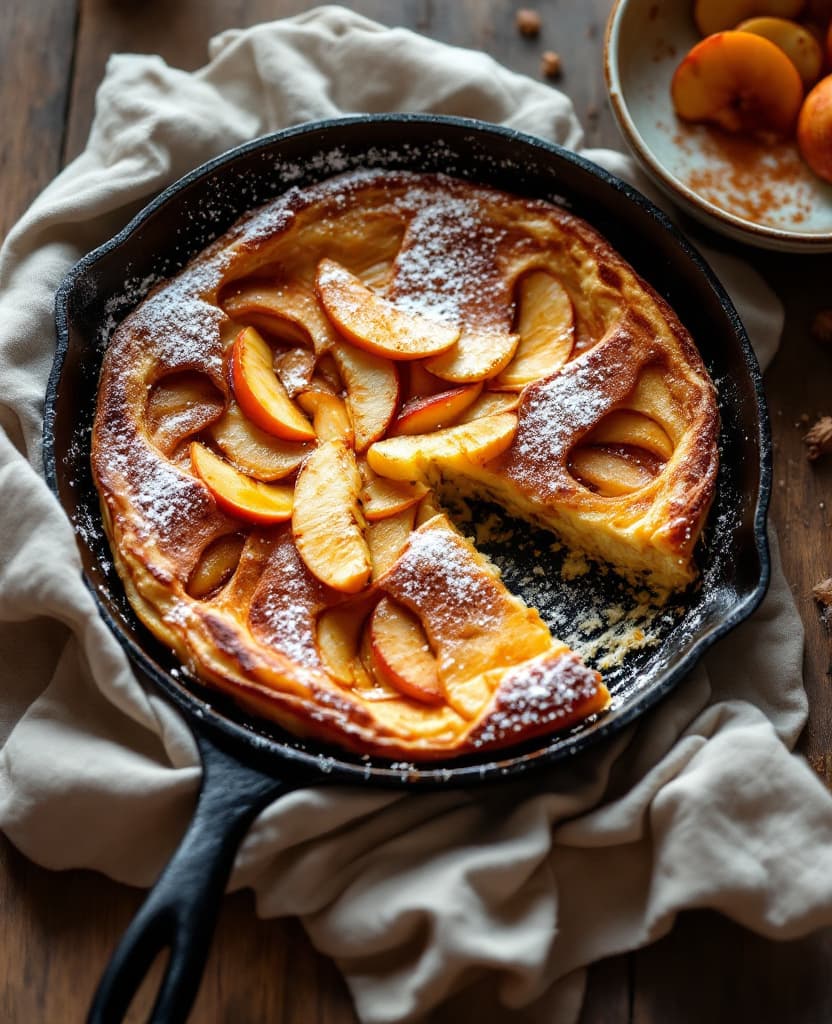
Thin apple wedges caramelized in butter and sugar, a simple egg batter poured over them in the same skillet, flipped golden, and finished with cinnamon sugar.
In Germany this is what an autumn Sunday tastes like. Apfelpfannkuchen starts with apples, sliced thin and caramelized in butter and sugar until their edges turn amber. Then the batter, a simple whisk of eggs, milk, and flour, goes straight over them in the same pan. The pancake that comes out is denser than a crêpe and richer than an American stack, with soft apple buried in every bite. German grandmothers make it without a recipe. You will too, after the second time. One skillet, thirty unhurried minutes, and a kitchen that smells like cinnamon.
🎃 On the Halloween table as The Jack-o-Lantern Pancake · see the costume
Method
Make the batter and let it rest.
Whisk the eggs with the milk, 1 tbsp of the sugar, the vanilla, and the salt. Add the flour and whisk until just smooth. Set aside for 10 minutes while you work on the apples.
Caramelize the apples.
Peel, core, and slice the apples into thin wedges. Melt 2 tbsp of the butter in a 10-inch nonstick or well-seasoned skillet over medium heat. Add the apples with 2 tbsp sugar and half the cinnamon and cook for 6-8 minutes, until golden at the edges and just tender.
Pour the batter over the apples.
Lower the heat to medium-low and add the last tbsp of butter, letting it slide beneath the fruit. Pour the batter evenly over the apples and cook, uncovered, for 8-10 minutes, until the edges are set and the underside is deep golden.
Flip with a plate.
Slide the pancake onto a large plate, apple side down. Invert the empty skillet over the plate, grip both with a hand on each, and turn the whole thing over in one confident motion. Return to the heat and cook 3-4 minutes more, until cooked through.
Dust and serve warm.
Slide the pancake onto a board, or serve it straight from the pan. Stir the remaining cinnamon into the powdered sugar and dust generously. Eat while the apples are still warm, with coffee, on a slow Sunday.
Frequently asked questions
- Which apples should I use?
- Firm, tart apples that hold their shape. In Germany the classic is Boskoop; Braeburn, Granny Smith, or Jonagold all work well. Avoid soft varieties like Red Delicious or McIntosh, which collapse into sauce in the pan.
- Is this the same as a Dutch baby?
- Close cousins, not twins. A Dutch baby is baked in a hot oven and puffs dramatically. Apfelpfannkuchen is cooked entirely on the stovetop and stays flat and dense, closer to a thick crêpe, and it is the version you would actually find on a German breakfast table.
- How do I flip it without a mess?
- Use a plate wider than your skillet. Slide the pancake out apple side down, invert the pan over the plate, and turn both together in one motion. If that feels like too much, quarter the pancake in the pan and flip the pieces with a spatula.
- My apples burned before the batter set. What went wrong?
- The heat was too high. Caramelize the apples over medium, then drop to medium-low before the batter goes in. The first side needs 8-10 gentle minutes; rushing it scorches the sugar underneath before the middle cooks.
- Can I make the batter ahead?
- Yes. It keeps overnight in the fridge, covered. Whisk it briefly before pouring, and loosen it with a splash of milk if it has thickened.
Rate this recipe
Join the Club to rate →