Arepas con quesito, Colombia's daily corn cakes
Masarepa, warm water, and salt, griddled into golden corn cakes and topped while still hot with butter and slices of salty quesito. The way Colombia starts almost every morning.
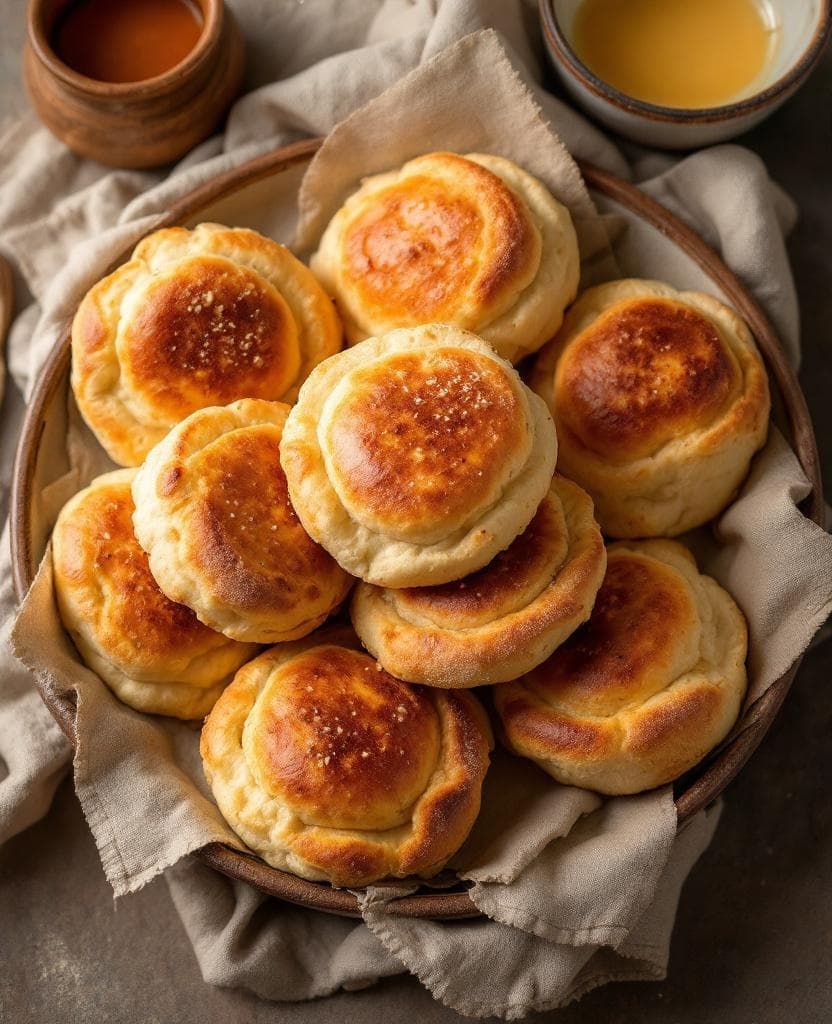
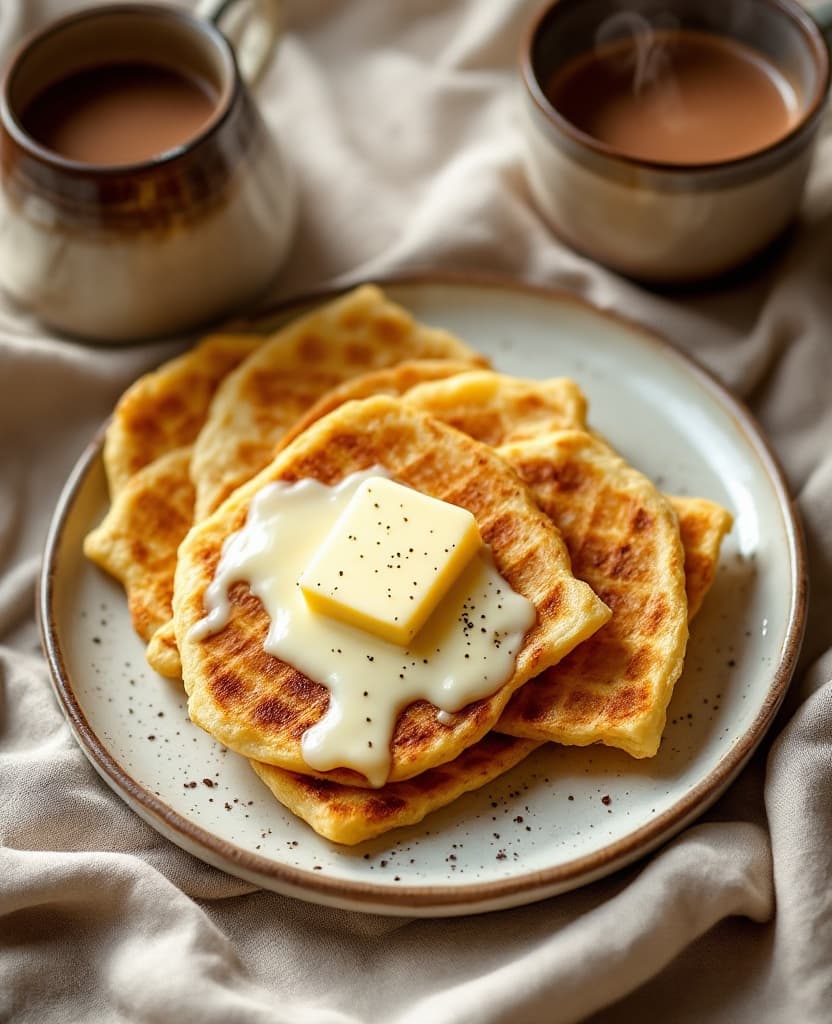
In Colombia, breakfast begins with the sound of an arepa hitting a hot griddle. The dough is just three things: masarepa, warm water, and salt, kneaded until smooth and pressed into thick disks. On the griddle they blister and freckle, building a crisp shell around a soft, steamy center. Then comes the part that makes the morning: a knob of butter and slices of salty quesito laid on top while the arepa is still too hot to hold, so the cheese slumps and melts into the corn. Serve it with hot chocolate or cafe con leche and drink slowly. This is not fast food that happens to be simple. It is a daily ritual, and it earns the repetition.
Method
Make the dough.
Stir the salt into the warm water until dissolved. Add the masarepa gradually, mixing with your fingers as you pour, then let the dough rest for 5 minutes so the corn hydrates fully. Knead for a minute or two until smooth and soft, like fresh playdough.
Shape the disks.
Divide the dough into 8 equal pieces and roll each into a ball between damp palms. Flatten into disks about 1 cm thick and 9-10 cm across. Smooth any cracked edges with a wet fingertip.
Griddle until freckled.
Heat a cast iron skillet or comal over medium heat and rub it with a thin film of butter or oil. Cook the arepas 4-5 minutes per side until golden brown spots appear and a crust forms. They are done when they feel light and sound faintly hollow when tapped.
Butter and cheese while hot.
Working while the arepas are hot, spread each one with butter and lay slices of quesito on top. The cheese should slump and soften from the residual heat. In Colombia the breakfast arepa is topped, not split and stuffed.
Serve the Colombian way.
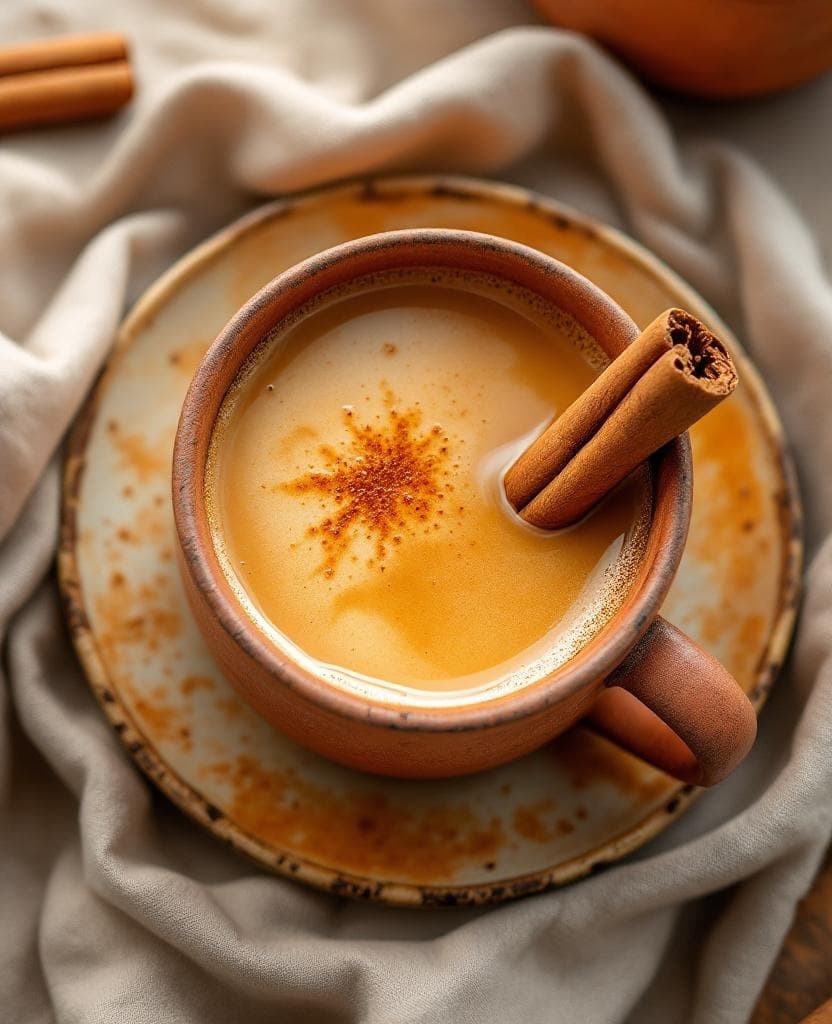
Bring the arepas to the table while the cheese is still melting. Pour hot chocolate or cafe con leche alongside. Some Colombians drop a piece of quesito straight into the hot chocolate too, and they are right to.
Frequently asked questions
- Can I substitute masa harina or regular cornmeal for masarepa?
- No. Masarepa is corn that has been cooked, dried, and ground, so it hydrates instantly into a workable dough. Masa harina is nixtamalized for tortillas and cornmeal is raw; neither will hold together. Look for P.A.N., Goya Masarepa, or Areparina in the Latin aisle or online.
- What is quesito, and what can I use instead?
- Quesito is a soft, salty fresh cheese from the Colombian countryside, sold in small rounds. Outside Colombia, queso fresco is the closest match. Fresh mozzarella with a pinch of flaky salt also works, and mild feta soaked in water for 10 minutes gets surprisingly close.
- White or yellow masarepa?
- Both are traditional. White is the everyday choice across much of Colombia and has a cleaner, softer flavor; yellow is slightly sweeter and more common in some regions. Use whichever you find, the method does not change.
- Why do my arepas crack when I shape them?
- The dough is too dry. Masarepa keeps absorbing water as it sits, so a dough that felt right can tighten up. Knead in warm water a tablespoon at a time until it presses flat without splitting, and keep the rest of the dough covered while you work.
- Can I make them ahead?
- Yes. Shape raw disks, stack them between squares of parchment, and freeze for up to 3 months; cook straight from frozen, adding 2-3 minutes per side. Cooked arepas reheat well in a toaster or dry skillet, never the microwave, which turns them gummy.
Rate this recipe
Join the Club to rate →