Omelette aux fines herbes, the soft rolled classic
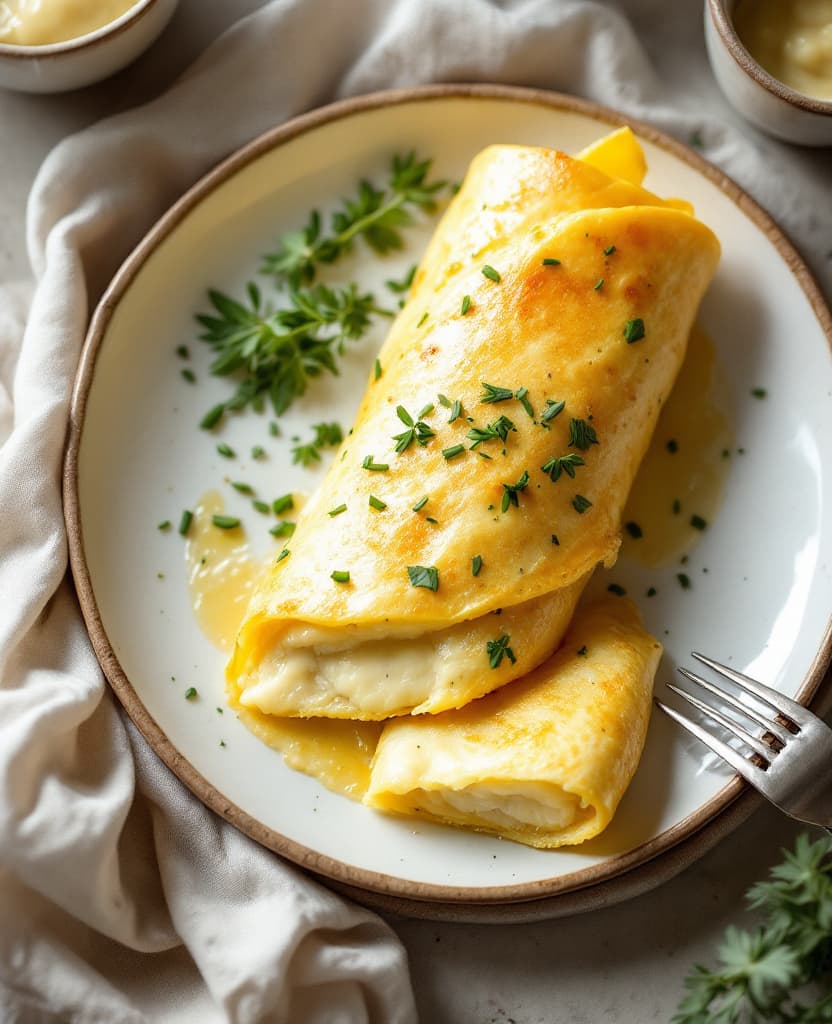
Three eggs beaten with chives, chervil, parsley, and tarragon, scrambled briskly in foaming butter, and rolled into a pale, custardy cigar. No color, no crust: the technique benchmark of the French kitchen.
In France this is the dish that tells a cook the truth. Three eggs, a knob of butter, a handful of fines herbes: chives, chervil, parsley, tarragon. The classic French omelette is pale outside with no color at all, custardy at the center, and rolled into a neat cigar rather than folded in half. It cooks in under two minutes, which is exactly why it takes practice. Escoffier's kitchens used it to test new hires, and it still works that way. The good news is that eggs are cheap and every attempt is breakfast. Give yourself a quiet morning and a small nonstick pan, and it will come.
Method
Chop the herbs fine.
Snip the chives and chop the chervil, parsley, and tarragon as finely as you can without bruising them. You want about two and a half tablespoons in total. Set aside a small pinch for the finished omelette.
Beat the eggs well.
Crack the eggs into a bowl and beat with a fork until yolk and white are completely combined, with no streaks and no foam. Stir in the herbs, salt, and white pepper. Do this just before the pan is ready, not earlier.
Heat the butter to foaming.
Set an 8-inch nonstick pan over medium heat and add 1 tablespoon of the butter. Swirl as it melts. When the foam subsides but before it takes any color, you are ready. If the butter browns, wipe the pan and start again.
Scramble, then let it set.
Pour in the eggs and immediately stir briskly with a heatproof spatula, shaking the pan at the same time, so small soft curds form. After 30-45 seconds, when the eggs are creamy and barely set, stop stirring. Spread them into an even layer and leave for 10-15 seconds so the base knits together. The surface should still look wet: that wetness becomes the custardy center.
Roll, don't fold.
Tilt the pan away from you and use the spatula to fold the near edge over by a third. Nudge the omelette down the slope, then tip it onto the plate so it lands seam side down. Shape it gently through a clean towel if it needs coaxing into a neat cigar.
Gloss with butter and serve.
Rub the remaining butter over the surface so the omelette shines. Scatter the reserved pinch of herbs on top. Eat right away, while the center is still soft.
Frequently asked questions
- Why isn't the omelette supposed to have any color?
- Browning changes the flavor and toughens the surface. The French style prizes a pale, tender skin over a creamy interior, which is why it cooks fast over moderate heat. If yours browns, the pan was too hot: lower the heat and shorten the cook next time.
- What exactly are fines herbes, and can I substitute?
- The classic quartet is chives, chervil, parsley, and tarragon, all fresh. Chervil is the hardest to find; extra parsley with a whisper more tarragon covers for it. Skip dried herbs entirely, they taste dusty here. Even chives and parsley alone make a lovely omelette.
- What pan do I need?
- An 8-inch (20 cm) nonstick skillet is right for three eggs and makes the roll far easier. Well-seasoned carbon steel works once you trust your technique. Anything larger spreads the eggs too thin and you lose the custardy middle.
- How runny should the center be?
- The classic center is baveuse: soft, moist, and just barely set, like a loose custard. If that is not your taste, leave the omelette in the pan 20-30 seconds longer before rolling. Keep the heat moderate so the outside stays pale while the inside finishes.
- Should I add milk, cream, or water to the eggs?
- No. The classic version is only eggs, butter, herbs, and seasoning. Added liquid dilutes the eggs and turns the texture watery rather than custardy. Creaminess comes from technique: brisk stirring, moderate heat, and stopping early.
Rate this recipe
Join the Club to rate →