

Gyeran-jjim, Korean steamed egg
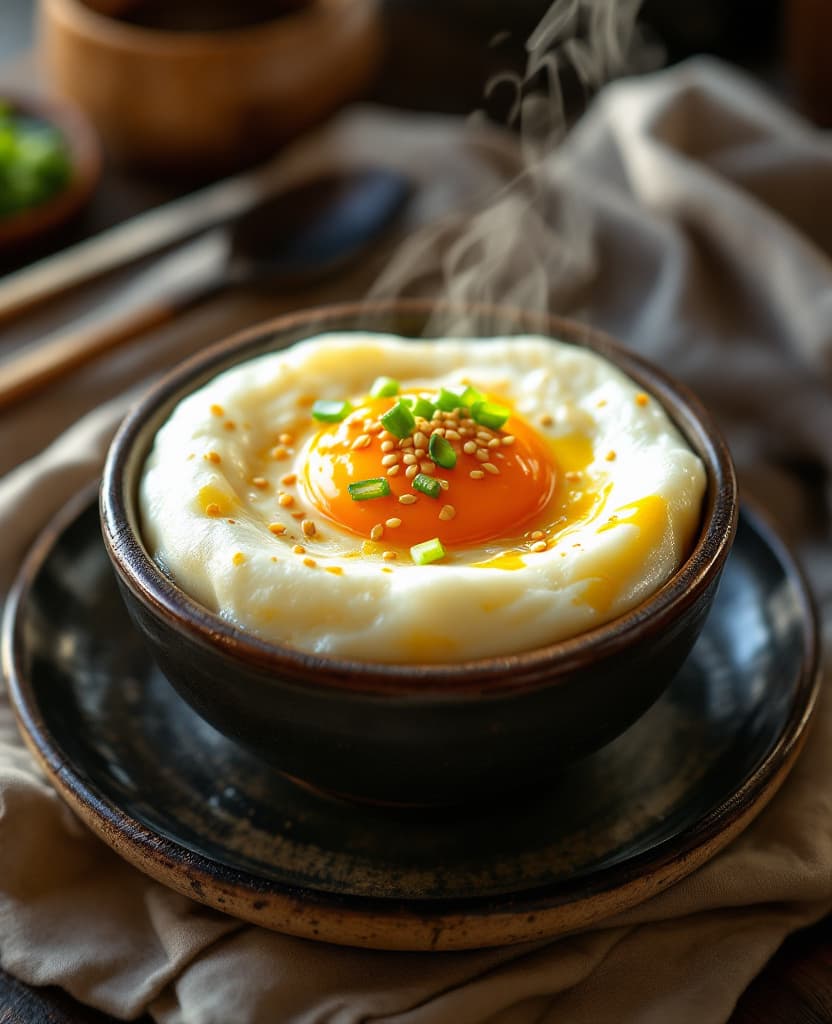
Eggs whisked with kelp broth, strained silky, and coaxed over low heat in an earthenware pot until they puff into a savory golden cloud, finished with scallions, sesame oil, and toasted sesame seeds.
In Korea, gyeran-jjim arrives at the table still rising. Eggs whisked with broth, strained silky, then coaxed over low heat in a small earthenware pot until they puff into a trembling golden cloud. No oven, no water bath, no fuss. The whole thing happens in one ttukbaegi on the stove in about ten minutes. Restaurants serve it bubbling beside spicy stews, but at home it is breakfast: soft enough for a spoon, gentle enough for early hours, finished with scallions, toasted sesame oil, and a scatter of sesame seeds. The only technique that matters is restraint. Low heat, a patient stir, and a lid at the right moment.
Method
Whisk and strain.
Crack the eggs into a bowl with the salt and beat until no streaks of white remain. Whisk in the water or kelp broth. Pour everything through a fine sieve into a jug: this ten-second strain is what makes the custard silky instead of stringy.
Start it over medium heat.
Pour the egg mixture into a small earthenware pot (ttukbaegi) or your smallest heavy saucepan. Set it over medium heat and stir gently but constantly with a spoon, scraping the bottom, for 3-4 minutes. Soft curds will form and the mixture will thicken to the texture of loose porridge.
Cover and let it rise.
When the egg is about three quarters set but still wet on top, scatter in half the scallions and drop the heat to its lowest setting. Cover with a lid, or the Korean way, an upturned stainless bowl, and cook undisturbed for 2-3 minutes. The steam trapped under the dome will puff the egg well above the rim.
Finish and serve immediately.
Turn off the heat and uncover. Drizzle with the sesame oil, then scatter over the sesame seeds and the remaining scallions. Carry the pot straight to the table with a bowl of warm rice; the puff settles within minutes, so let everyone see it rise.
Frequently asked questions
- I don't have a ttukbaegi. What should I use?
- Your smallest, heaviest saucepan with a lid works well; a 14-16 cm pot is ideal for four eggs. You can also steam the strained mixture in a covered bowl set over simmering water for 12-15 minutes, which gives you the gentler bowl-style jjim.
- Why did mine turn out rubbery and full of holes?
- The heat was too high after covering. Once the lid goes on, the burner should be at its absolute lowest; the trapped steam does the work. Pull it while the center still trembles, since it keeps cooking in the hot pot.
- What is saeujeot and can I skip it?
- Saeujeot is Korean salted fermented shrimp, and a teaspoon of it, finely minced, is the traditional seasoning for gyeran-jjim. It brings a deep savory salinity that plain salt cannot. Skip it if you like: fine salt or a splash of fish sauce both make a very good jjim.
- My egg puffed up, then collapsed. Did I do something wrong?
- No. The dome is held up by steam, and it settles a few minutes after the pot leaves the heat. In Korea it is served immediately, still rising, which is half the pleasure. Get it to the table fast.
- Can I just use water, or should I make broth?
- Plain water is completely legitimate and common at home. For more depth, steep a palm-sized piece of dried kelp in cold water for 30 minutes, or overnight in the fridge, and use that. Anchovy stock is the restaurant standard if you keep it on hand.
Rate this recipe
Join the Club to rate →