Maritozzo con la panna, Roman cream bun
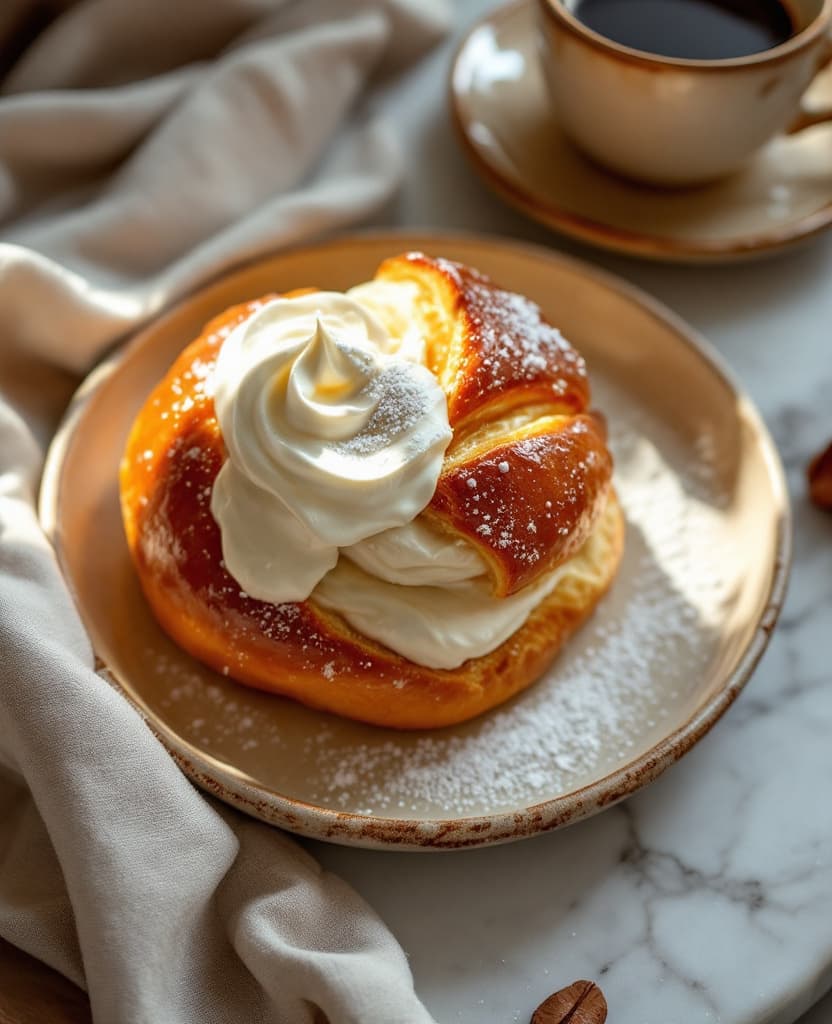
A soft, orange-scented yeasted bun brushed with shining syrup, split down the middle, and filled with an almost indecent amount of softly whipped cream.
In Rome, breakfast at the bar is an espresso and, on the best mornings, a maritozzo. The bun itself is humble: a soft, lightly sweet yeasted dough scented with orange zest and enriched with olive oil, baked to a deep gold and brushed with syrup until it shines. Then comes the point of the whole exercise, a split down the middle and a filling of whipped cream so generous it gets leveled flat with a spatula, like plastering a wall. Romans have eaten some version of this bun since suitors gave them as gifts, which is where the name comes from: marito, husband. Yours needs an unhurried morning and a proofing bowl.
Method
Make a soft, glossy dough.
Whisk the flour, yeast, and 1/3 cup sugar in a large bowl. Add the lukewarm milk, one egg, the olive oil, honey, orange zest, and salt, and mix into a shaggy mass. Knead 10-12 minutes by hand, or 8 in a stand mixer, until smooth, elastic, and only faintly tacky.
Let it rise until doubled, about 75 minutes.
Shape the dough into a ball, set it in a lightly oiled bowl, cover, and leave it somewhere warm until doubled, 60-90 minutes depending on your kitchen. A finger pressed into it should leave a dent that fills back slowly.
Shape six ovals and proof again.
Divide the dough into 6 equal pieces, about the weight of a small orange each. Roll each into a tight ball, then into a slightly elongated oval, the classic maritozzo shape. Space them on a parchment-lined sheet, cover loosely, and proof 45-60 minutes, until puffy and nearly doubled.
Bake to a deep gold, then glaze.
Heat the oven to 350°F (175°C). Brush the buns gently with the beaten egg and bake 16-18 minutes, until deep golden and hollow-sounding underneath. While they bake, simmer the 3 tbsp sugar with 3 tbsp water for 2 minutes. Brush the hot syrup over the hot buns and let them cool completely on a rack.
Whip the cream to soft, spreadable peaks.
Whip the cold cream with 2 tbsp of the powdered sugar to peaks that hold their shape but still look glossy, not grainy. Overwhipped cream turns buttery and will not smooth flat, so stop early and finish with a few strokes by hand.
Split, fill, and level like a Roman.
With a serrated knife, cut each cooled bun deeply down the center without going all the way through, like a book that will not quite open. Spoon in the cream generously, then draw a small offset spatula flat across the top so the cream sits level and clean. Dust with the last of the powdered sugar and serve with espresso.
Frequently asked questions
- Can I make the buns the day before?
- Yes, and it fits a slow morning perfectly. Bake and glaze the buns, store them airtight overnight, and whip the cream fresh before serving. You can also retard the shaped buns in the fridge overnight and bake them in the morning; give them 45 minutes at room temperature first.
- Olive oil or butter in the dough?
- Roman bakeries historically used olive oil, and it gives the crumb a tender, faintly savory depth that suits the cream. Butter works and makes a slightly richer, more brioche-like bun. Both are legitimate; the oil version is the older Roman habit.
- My buns came out dense. What happened?
- Almost always underproofing or too much flour. The dough should feel soft and slightly tacky after kneading, and the shaped buns need to look visibly puffy before baking. Cold kitchens can double the rise times, so trust the dough's look over the clock.
- Should the cream be sweetened or plain?
- Barely sweetened is the Roman way: the bun and syrup carry the sugar, and the cream is there for cool, milky contrast. Two tablespoons of powdered sugar for two cups of cream is plenty. Vanilla is optional and mildly heretical.
- What did the original maritozzi contain?
- The older, leaner version was studded with raisins, pine nuts, and candied orange peel, and Lent versions were plainer still. The cream-filled maritozzo con la panna is the twentieth-century bar classic that conquered Rome's breakfast counters, and it is the one this recipe makes.
Rate this recipe
Join the Club to rate →