Puff-puff, Nigeria's morning doughnuts
Yeasted batter scooped by hand into hot oil and fried into deep golden spheres, crisp outside, springy and honeycombed within, warm with nutmeg.
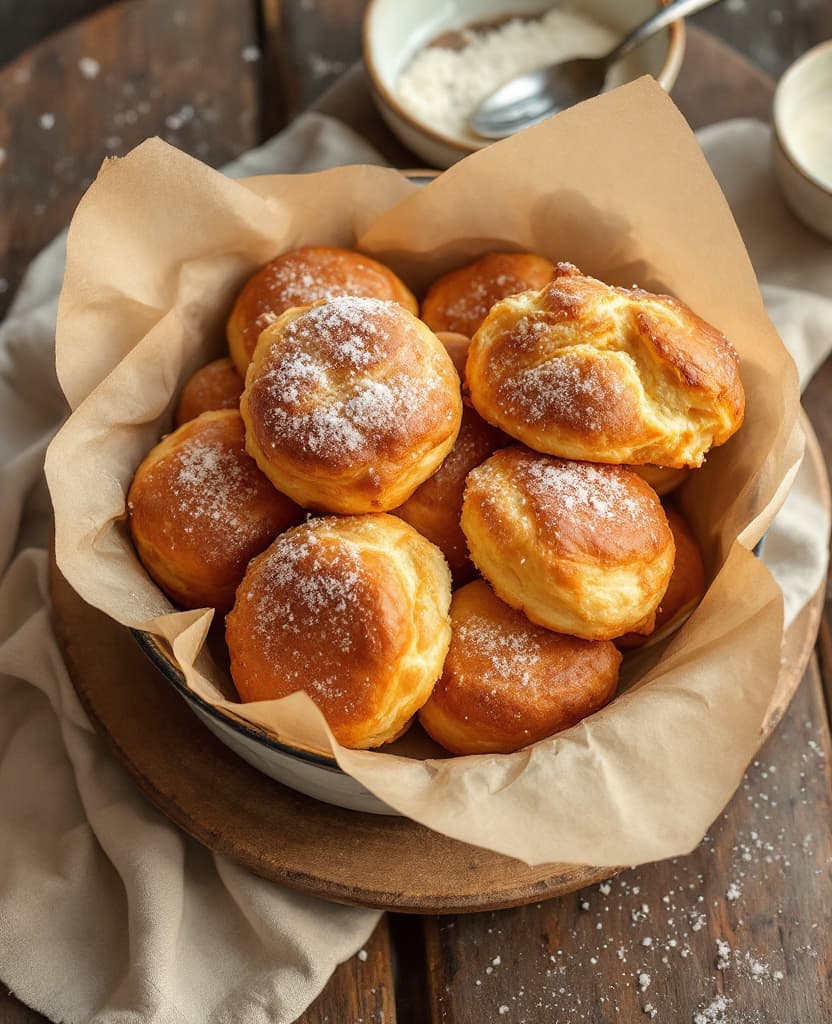
In Nigeria the day begins with the sound of hot oil. At morning stalls from Lagos to Kano, women scoop yeasted batter by hand, squeezing perfect rounds between thumb and forefinger straight into bubbling pans, and sell them in paper twists to schoolchildren and commuters. Puff-puff is deep golden outside, springy and honeycombed inside, sweet but not cloying, with a whisper of nutmeg that tells you a Nigerian made it. The batter needs nothing but time: one good rise, and it practically fries itself. Make a batch on a slow Saturday and understand why no Nigerian party, and no proper Nigerian morning, is complete without them.
Method
Wake the yeast.
Stir the yeast and a pinch of the sugar into the warm water and let it stand 5-10 minutes, until foamy on top. The water should feel like a warm bath, not hot; heat above 115°F (46°C) will kill the yeast.
Beat a thick, stretchy batter.
Whisk the flour, remaining sugar, salt, and nutmeg in a large bowl. Pour in the yeast mixture and beat with your hand or a sturdy spoon for a full 2 minutes, until smooth, elastic, and thick enough to hold its shape for a moment when lifted. This is a batter, not a dough; it should slump, not pour.
Let it rise until bubbly.
Cover the bowl with a cloth and leave it somewhere warm for 45-60 minutes, until doubled in size and covered in lazy bubbles. The surface should look alive. This rise is where all the lightness comes from, so do not rush it.
Heat the oil properly.
Pour the oil into a deep, heavy pot to a depth of at least 3 inches and bring it to 350°F (175°C) over medium heat. Test with a small drop of batter: it should sink briefly, rise at once, and start bubbling steadily without browning in seconds.
Scoop by hand and fry in batches.
Wet one hand, grab a handful of batter, and squeeze a round through the circle of your thumb and forefinger, letting each ball drop gently into the oil. Fry 5-6 at a time for 5-6 minutes, turning with a slotted spoon, until deep golden brown all over and cooked through.
Drain and eat warm.
Lift the puff-puff onto a rack or paper towels and let them drain for a minute. Roll them in sugar while warm if you like, or serve them plain the street-stall way, piled high and eaten with your fingers alongside tea, coffee, or spicy pepper sauce.
Frequently asked questions
- Why is puff-puff a batter and not a rolled dough?
- The high hydration is the whole point. A wet, well-beaten yeasted batter traps large bubbles during the rise and expands fast in hot oil, giving puff-puff its signature springy, honeycombed crumb. A stiff, rollable dough would fry up denser, closer to a bread roll than a puff.
- How do I scoop the batter by hand like the street vendors?
- Wet your hand first so the batter releases. Cup a handful, make a loose fist, and squeeze so a ball of batter rises through the ring of your thumb and forefinger, then let it drop from just above the oil, never from a height. It takes three or four tries to find the rhythm. Wet spoons or a scoop work fine while you learn.
- Why did my puff-puff come out oily?
- The oil was too cool, almost every time. Below about 330°F (165°C) the batter sits and soaks instead of sealing. Fry in small batches so the temperature does not crash, and let the oil recover to 350°F (175°C) between rounds. Crowding the pot is the most common culprit.
- Why are mine dense instead of springy?
- Either the yeast was dead, the rise was cut short, or the batter was too stiff. Proof the yeast until visibly foamy, wait for the batter to truly double with bubbles across the surface, and keep the batter soft enough to slump off a spoon. Cold kitchens can stretch the rise past an hour; go by the bubbles, not the clock.
- Can I make the batter ahead, and how do I store leftovers?
- Yes. Mix the batter the night before and let it rise slowly in the fridge, then bring it toward room temperature for 30 minutes before frying. Fried puff-puff is best the day it is made; reheat leftovers in a 350°F (175°C) oven for 5 minutes to revive the crust. Across West Africa the same fritter appears as bofrot in Ghana and mikate in Congo, and none of them last long either.
Rate this recipe
Join the Club to rate →