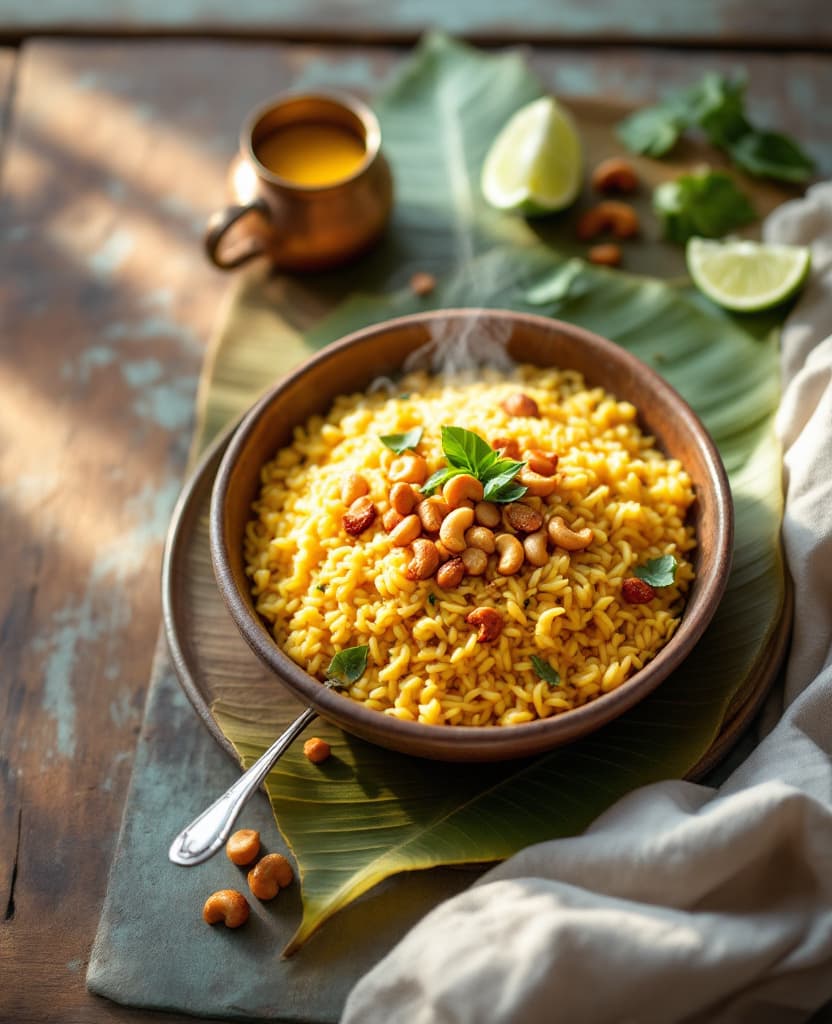


Poha, golden flattened rice
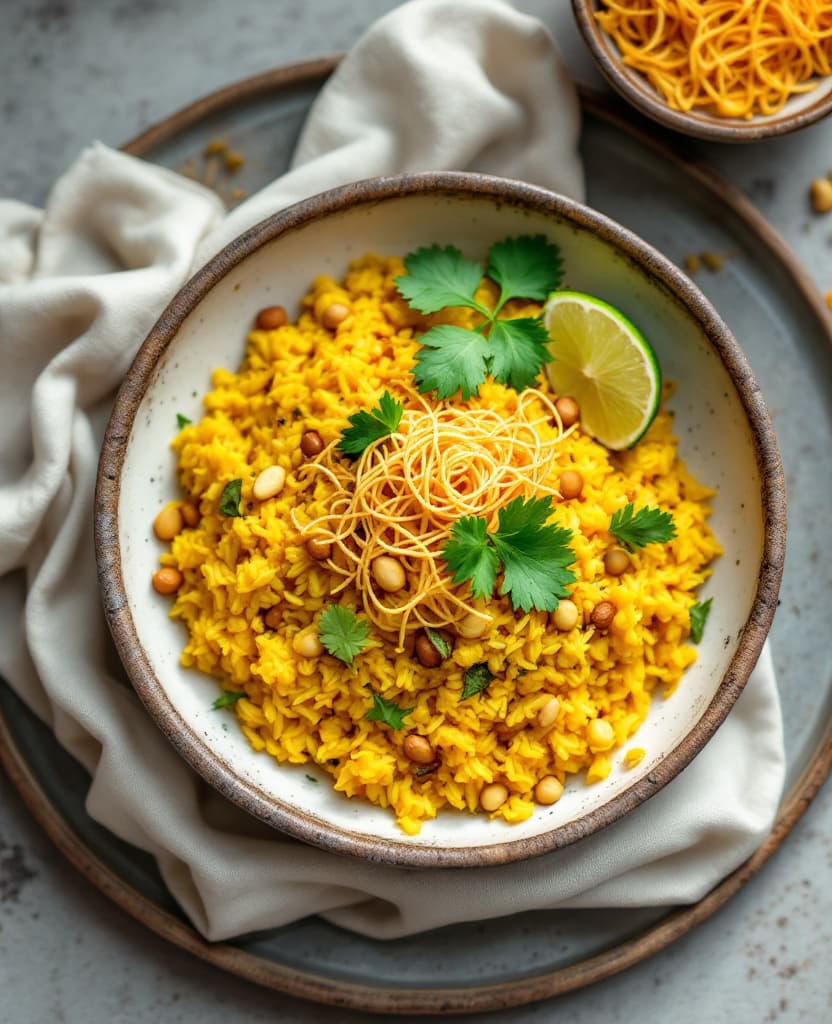
Flattened rice tossed through popped mustard seeds, curry leaves, golden peanuts and turmeric, then brightened with lime and finished with fresh coriander and crisp sev.
Across Maharashtra and Madhya Pradesh, this is what a weekday morning tastes like. Flattened rice, rinsed until just tender, tossed through a tempering of popped mustard seeds, curry leaves and golden fried peanuts, stained yellow with turmeric and sharpened with lime. Poha is fast food in the truest sense: one pan, fifteen minutes, and a breakfast light enough to eat every single day, which is exactly how millions of people eat it. The finish is the point. A squeeze of lime, a shower of fresh coriander, and a generous handful of crunchy sev over the top. Soft, hot, crisp and bright in every spoonful.
Method
Rinse the poha.
Put the poha in a colander and rinse briefly under cold running water, 20-30 seconds, turning the flakes gently with your fingers. Drain well and set aside for 5 minutes. The flakes will soften and swell while staying separate. Press one between your fingers: it should give easily without turning to paste.
Fry the peanuts.
Heat the oil in a wide pan over medium heat. Add the peanuts and fry, stirring, for 2-3 minutes until golden and crackling. Lift them out with a slotted spoon and set aside, leaving the oil in the pan.
Make the tempering.
Add the mustard seeds to the hot oil. When they pop, add the curry leaves and green chili and let them crackle for a few seconds. Stir in the onion with a pinch of salt and cook for 3-4 minutes until soft and translucent, not browned.
Add turmeric and poha.
Stir the turmeric into the onions and let it bloom for 30 seconds. Add the drained poha, the fried peanuts and the salt, plus a pinch of sugar if you like it the Maharashtrian way. Toss gently until every flake turns yellow, then cover and steam on low for 2 minutes.
Finish and serve.
Take the pan off the heat and squeeze over the lime juice. Fold through most of the coriander and taste for salt. Serve hot, showered with sev and the remaining coriander, with a lime wedge on the side.
Frequently asked questions
- Can I use thin poha instead of thick?
- No. Thin poha is rolled almost paper-fine and dissolves the moment it touches water. Look for thick or medium poha, often labelled jada poha, at any Indian grocer. It holds its shape after rinsing and stays fluffy in the pan.
- My poha turned out mushy. What went wrong?
- Almost always over-soaking. Rinse it briefly in a colander under running water, never soak it in a bowl. 20-30 seconds is enough. Drain well and let it rest for 5 minutes; the flakes finish softening on their own.
- What is sev and is there a substitute?
- Sev are thin, crisp fried noodles made from chickpea flour, sold in packets at Indian grocers. Fine nylon sev is the classic choice here. If you cannot find it, extra fried peanuts give you the crunch, though you lose a little of that street-stall flourish.
- I cannot find fresh curry leaves. Can I skip them?
- You can make poha without them and it will still be good, but their aroma is a big part of the dish. Frozen curry leaves work almost as well as fresh; dried ones do not. Do not substitute curry powder, which is a different thing entirely.
- Is this the Maharashtrian or Indori version?
- This is closest to kanda poha, the onion-forward Maharashtrian style. In Indore the poha is steamed, seasoned with a spice mix called jeeravan and buried under sev, sometimes with pomegranate seeds. The base technique is the same, so this recipe is a good doorway to both.
Rate this recipe
Join the Club to rate →