

Hotteok, Korean stuffed pancakes
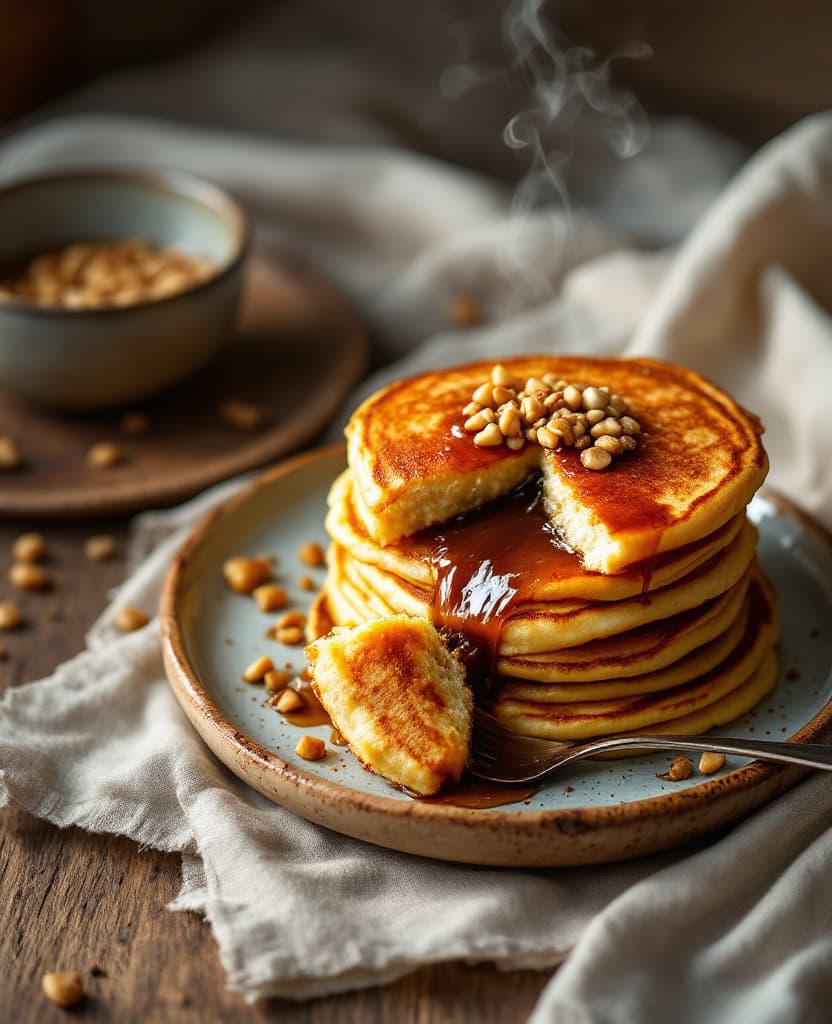
Soft yeasted dough wrapped around brown sugar, cinnamon, and chopped nuts, then pressed flat in a hot oiled pan until the filling melts into warm caramel.
In South Korea, hotteok belongs to winter. When the cold settles over Seoul, street vendors set up griddles on the sidewalks and press discs of yeasted dough flat with a steel tool made for exactly this job, and people eat them standing up, passing the pancake from hand to hand because the middle is molten. Inside is a simple mercy: brown sugar, cinnamon, and chopped nuts that melt together into a hot caramel syrup. The dough is soft and slightly chewy, the outside fried gold and crisp. Making them at home takes a lazy hour of rising and ten dangerous, wonderful minutes at the stove. The first bite is always too soon. Everyone takes it anyway.
Method
Mix a soft, sticky dough.
Whisk both flours, the 1 tbsp sugar, the yeast, and the salt in a large bowl. Pour in the warm milk and water and stir with a wooden spoon for 2-3 minutes, until a shaggy, sticky dough forms with no dry patches. It should feel wetter than bread dough, closer to a very thick batter you could just barely knead. Cover the bowl.
Let it rise until doubled, about an hour.
Leave the covered bowl somewhere warm for 60-70 minutes, until the dough has doubled and the surface looks puffy and bubbled. Punch it down with a wet hand, folding it over itself a few times, then let it rest 10 minutes more while you make the filling.
Stir together the filling.
In a small bowl, mix the brown sugar, cinnamon, and chopped nuts until the nuts are evenly coated. That is the whole filling: in the heat of the pan it will melt into the dark syrup hotteok is famous for.
Fill and seal each pancake.
Oil your hands well; the dough is sticky by design. Divide it into 6 pieces. Flatten one piece into a palm-sized disc, spoon a generous 1.5 tbsp of filling into the center, then gather the edges up and over, pinching them together firmly at the top like a little purse. Roll the sealed ball gently between your palms and set it seam side down. Repeat with the rest.
Fry and press.
Heat 2 tbsp of the oil in a nonstick or cast-iron skillet over medium heat until it shimmers. Add 2-3 dough balls seam side down and cook 1 minute. Flip them, then press each one flat with the oiled base of a sturdy cup or a wide spatula, slowly and evenly, until about half an inch thick. Cook 2-3 minutes per side, flipping once more, until both faces are deep golden brown and the pancake feels soft and molten at the center. Repeat with the remaining oil and dough.
Cool two minutes, then eat like you are on a Seoul sidewalk.
Move the hotteok to a rack or a paper-lined plate and wait a full 2 minutes; the filling inside is genuinely lava. Then eat them warm, folded into a napkin, with coffee or barley tea, while the next batch fries.
Frequently asked questions
- What do I use to press them if I have no hotteok press?
- Korean vendors use a flat steel press called a nulleugae, but any wide, flat, heavy tool works: the oiled bottom of a metal measuring cup, a small saucepan, or a broad spatula pressed with your palm. Oil it first so the dough releases cleanly.
- My filling leaked everywhere. How do I stop that?
- Almost always a sealing problem. Pinch the gathered edges together hard, until the dough truly fuses, and set the ball seam side down in the pan so the seam cooks shut before you press. Also resist overfilling; 1.5 tbsp is plenty.
- Can the dough rise overnight in the fridge?
- Yes, and it improves the flavor. Mix the dough, cover the bowl, and refrigerate up to 24 hours; it will rise slowly and taste subtly tangier, closer to the best street versions. Let it sit at room temperature 30 minutes before shaping.
- Is there a savory version?
- There is. In Korea you will also find ya-chae hotteok stuffed with glass noodles and vegetables, especially in Busan. The sweet brown sugar version in this recipe is the nationwide classic, and the one nearly every vendor sells on a winter morning.
- How hot should the pan be?
- Steady medium. Too hot and the outside browns before the sugar inside melts; too cool and the dough drinks the oil and turns greasy. You want a gentle, constant sizzle, with each side taking a leisurely 2-3 minutes to reach deep gold.
Rate this recipe
Join the Club to rate →